
Sponsored

2.7 catch can?

beachman101

Badlands
Well-Known Member
Joined
Jul 31, 2020
Threads
90
Messages
1,182
Reaction score
3,820
Location
;pkl
Vehicle(s)
8
Your Bronco Model
Badlands
So i have been delving deeper into off road youtube and they say that a catch can is a really good idea for off road vehicles. I vaguely remember a discussion here about it.

What do the experts think? is it needed? does it help? is the modern 2.7 advanced enough that it doesnt need it?
Sponsored


 

Wanted33

Outer Banks
Well-Known Member
First Name
Jim
Joined
Aug 1, 2018
Threads
20
Messages
4,048
Reaction score
9,247
Location
Down south in Dixie
Vehicle(s)
2018 Mustang GT, 2019 Wrangler, 2020 Ranger
Your Bronco Model
Outer Banks
Clubs
 
The 2.7L will have "port", and "direct" injection. So, a catch can really isn't needed unless you want one.
 

jjack50

Heritage
Well-Known Member
First Name
Jack
Joined
Aug 18, 2020
Threads
2
Messages
421
Reaction score
929
Location
Temple, NH
Vehicle(s)
2013 VW Jetta TDI, 2016 F350 4WD Crew Cab
Your Bronco Model
Heritage
Clubs
 
So i have been delving deeper into off road youtube and they say that a catch can is a really good idea for off road vehicles. I vaguely remember a discussion here about it.

What do the experts think? is it needed? does it help? is the modern 2.7 advanced enough that it doesnt need it?
The vehicles that benefit from a catch can have higher performance engines that significantly increase crankcase pressures by causing more cylinder blow-by and are direct injected. The 2.7 is not one of those engines and in addition, has port injection in addition to direct which washes the intake channel and valve where carbon could build up.
So, there is no necessity to add a catch can to the 2.7. I know the 2.3 in the Ranger has a built-in air/oil separator that accomplishes most of what a catch can could. I don’t know if the 2.7 also has one.
 

broncorik

Badlands
Well-Known Member
First Name
Rob
Joined
Mar 7, 2020
Threads
52
Messages
1,829
Reaction score
2,497
Location
91320
Vehicle(s)
Bronco
Your Bronco Model
Badlands
The vehicles that benefit from a catch can have higher performance engines that significantly increase crankcase pressures by causing more cylinder blow-by and are direct injected. The 2.7 is not one of those engines and in addition, has port injection in addition to direct which washes the intake channel and valve where carbon could build up.
So, there is no necessity to add a catch can to the 2.7. I know the 2.3 in the Ranger has a built-in air/oil separator that accomplishes most of what a catch can could. I don’t know if the 2.7 also has one.
Interesting video:
 

Sponsored

jjack50

Heritage
Well-Known Member
First Name
Jack
Joined
Aug 18, 2020
Threads
2
Messages
421
Reaction score
929
Location
Temple, NH
Vehicle(s)
2013 VW Jetta TDI, 2016 F350 4WD Crew Cab
Your Bronco Model
Heritage
Clubs
 
Interesting video:
Watched the vid. There are some issues with it. Many cars before PCV had a breather cap which was usually on the top of a valve cover that vented vapors directly to the air. With the onset of PCV, the first versions just replaced the breather with a plug that had a hose that plumbed the extra pressure to the intake including any oil droplets or other liquids that might be entrained in the vapor stream. Carburetors or port injection washed the ports so there wasn't a big problem.
Blow-by doesn't just leisurely drift down into the crankcase. There are rings on the pistons for a reason. Most of the extra pressure from combustion is stopped by the rings but some will always get by into the crankcase. The amount that gets by is determined by the overpressure in the cylinder during combustion. Forced induction -above designed in pressures- or any method of significantly increasing the performance of an engine will increase blow-by. That's the reason vapor separators (also called air-oil separators) are included for higher performance engines. Some engines include a vapor separator that runs the removed liquid back into the crankcase. Others include a container that will need to be emptied from time to time.
In any case, the remaining vapors will continue through the hoses to be introduced into the intake system. Unlike what this guy said, it is not clean air that comes out of a catch can and goes into the intake. it is gases that are not liquid and thus not removed by the catch can. This includes oil vapors, combustion gases, gasoline vapors, and others all of which will be burned or blown out through the exhaust or blown-by back to the crankcase.

Anyway, The best catch can is the one that makes an owner happy by doing its job with the least amount of fiddling and the least amount of maintenance.
 

broncorik

Badlands
Well-Known Member
First Name
Rob
Joined
Mar 7, 2020
Threads
52
Messages
1,829
Reaction score
2,497
Location
91320
Vehicle(s)
Bronco
Your Bronco Model
Badlands
Watched the vid. There are some issues with it. Many cars before PCV had a breather cap which was usually on the top of a valve cover that vented vapors directly to the air. With the onset of PCV, the first versions just replaced the breather with a plug that had a hose that plumbed the extra pressure to the intake including any oil droplets or other liquids that might be entrained in the vapor stream. Carburetors or port injection washed the ports so there wasn't a big problem.
Blow-by doesn't just leisurely drift down into the crankcase. There are rings on the pistons for a reason. Most of the extra pressure from combustion is stopped by the rings but some will always get by into the crankcase. The amount that gets by is determined by the overpressure in the cylinder during combustion. Forced induction -above designed in pressures- or any method of significantly increasing the performance of an engine will increase blow-by. That's the reason vapor separators (also called air-oil separators) are included for higher performance engines. Some engines include a vapor separator that runs the removed liquid back into the crankcase. Others include a container that will need to be emptied from time to time.
In any case, the remaining vapors will continue through the hoses to be introduced into the intake system. Unlike what this guy said, it is not clean air that comes out of a catch can and goes into the intake. it is gases that are not liquid and thus not removed by the catch can. This includes oil vapors, combustion gases, gasoline vapors, and others all of which will be burned or blown out through the exhaust or blown-by back to the crankcase.

Anyway, The best catch can is the one that makes an owner happy by doing its job with the least amount of fiddling and the least amount of maintenance.
The manufacturers will always try to oversimplify...but what I can share is that my catch can has kept a lot of oil out of places oil should not be going. The best way to determine potential effectiveness for newer 2.3s and 2.7s is to review feedback from folks who are currently running them on post-2018s. If they are getting any oil of them, like in the video for the 3.5, that suggests a benefit for running a catch can. The rest is just theory at that point...the guy who wrote the PDF I attached was a 50 year master mechanic for MB, and he said there was a significant improvement on any turbo engine using a catch can with longevity and eventual cost savings.
 

BigBlueBronc

Badlands
Well-Known Member
First Name
Steve
Joined
Mar 28, 2024
Threads
0
Messages
90
Reaction score
34
Location
Toronto Ontario Canada
Vehicle(s)
2023 Heritage Limited REB Sasquatch 2.7 4DR , 2023, 2004 GL1800, 2020 Slingshot
Your Bronco Model
Badlands
So i have been delving deeper into off road youtube and they say that a catch can is a really good idea for off road vehicles. I vaguely remember a discussion here about it.

What do the experts think? is it needed? does it help? is the modern 2.7 advanced enough that it doesnt need it?
You could use it off-road, then remove for on road. Warranty voided off roading I suspect. It affects emission contril system and tgat voiss warranty according to Ford.
 

BigBlueBronc

Badlands
Well-Known Member
First Name
Steve
Joined
Mar 28, 2024
Threads
0
Messages
90
Reaction score
34
Location
Toronto Ontario Canada
Vehicle(s)
2023 Heritage Limited REB Sasquatch 2.7 4DR , 2023, 2004 GL1800, 2020 Slingshot
Your Bronco Model
Badlands
You could use it off-road, then remove for on road. Warranty voided off roading I suspect. It affects emission control system and that voids warranty according to Ford.
 

BigBlueBronc

Badlands
Well-Known Member
First Name
Steve
Joined
Mar 28, 2024
Threads
0
Messages
90
Reaction score
34
Location
Toronto Ontario Canada
Vehicle(s)
2023 Heritage Limited REB Sasquatch 2.7 4DR , 2023, 2004 GL1800, 2020 Slingshot
Your Bronco Model
Badlands
So i have been delving deeper into off road youtube and they say that a catch can is a really good idea for off road vehicles. I vaguely remember a discussion here about it.

What do the experts think? is it needed? does it help? is the modern 2.7 advanced enough that it doesnt need it?
Even FORD Performance says their catch cans are for off road. They appear to violate emmision standards . so only use in off roading. California especially risky, due to their extea emmision laws.
 

Sponsored

Felix808

Badlands
Well-Known Member
Joined
Jul 19, 2020
Threads
52
Messages
4,773
Reaction score
10,170
Location
SRV CA
Vehicle(s)
After 746 days, a MY22 4-door Badlands Bronco :-)
Your Bronco Model
Badlands
Clubs
 
The 2.7L will have "port", and "direct" injection. So, a catch can really isn't needed unless you want one.
The injectors don't run at the same time. Port injectors are low throttle only.
Draw your own conclusions 🤠


Ducati1098

Wildtrak
Well-Known Member
Joined
Jul 14, 2020
Threads
25
Messages
9,545
Reaction score
21,994
Location
Midwest
Vehicle(s)
2022 Bronco Wildtrak, 2006 Corvette Z06, 2012 Ford Fusion
Your Bronco Model
Wildtrak
Clubs
 
The injectors don't run at the same time. Port injectors are low throttle only.
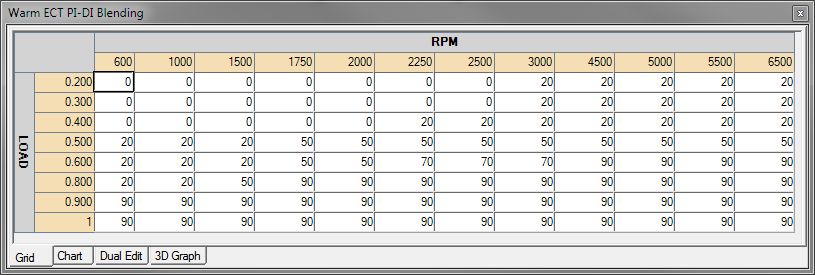
That's not necessarily true. In many instances they can and do operate the low and high side at the same time. I'm pretty sure there is a whole "blending" strategy
 

Felix808

Badlands
Well-Known Member
Joined
Jul 19, 2020
Threads
52
Messages
4,773
Reaction score
10,170
Location
SRV CA
Vehicle(s)
After 746 days, a MY22 4-door Badlands Bronco :-)
Your Bronco Model
Badlands
Clubs
 
That's not necessarily true. In many instances they can and do operate the low and high side at the same time. I'm pretty sure there is a whole "blending" strategy
Interesting as he states that they do not in the video :unsure:

Again, I would draw your own conclusions on what you see between the 3 examples 🤠
 

Ducati1098

Wildtrak
Well-Known Member
Joined
Jul 14, 2020
Threads
25
Messages
9,545
Reaction score
21,994
Location
Midwest
Vehicle(s)
2022 Bronco Wildtrak, 2006 Corvette Z06, 2012 Ford Fusion
Your Bronco Model
Wildtrak
Clubs
 
Interesting as he states that they do not in the video :unsure:

Again, I would draw your own conclusions on what you see between the 3 examples 🤠
Well to be fair, he is an absolute idiot lol
But I'll let everyone draw their own conclusions about him also.

Here is a graph from one of the F150 forums showing a blending strategy. I think this was from a 5.0, but I'm assuming the ecoboost is no different. That being said, I'm certainly no expert tuner or know everything about Ford's fueling strategy
Ford Bronco 2.7 catch can? 1764962097616-kh
Sponsored


Top