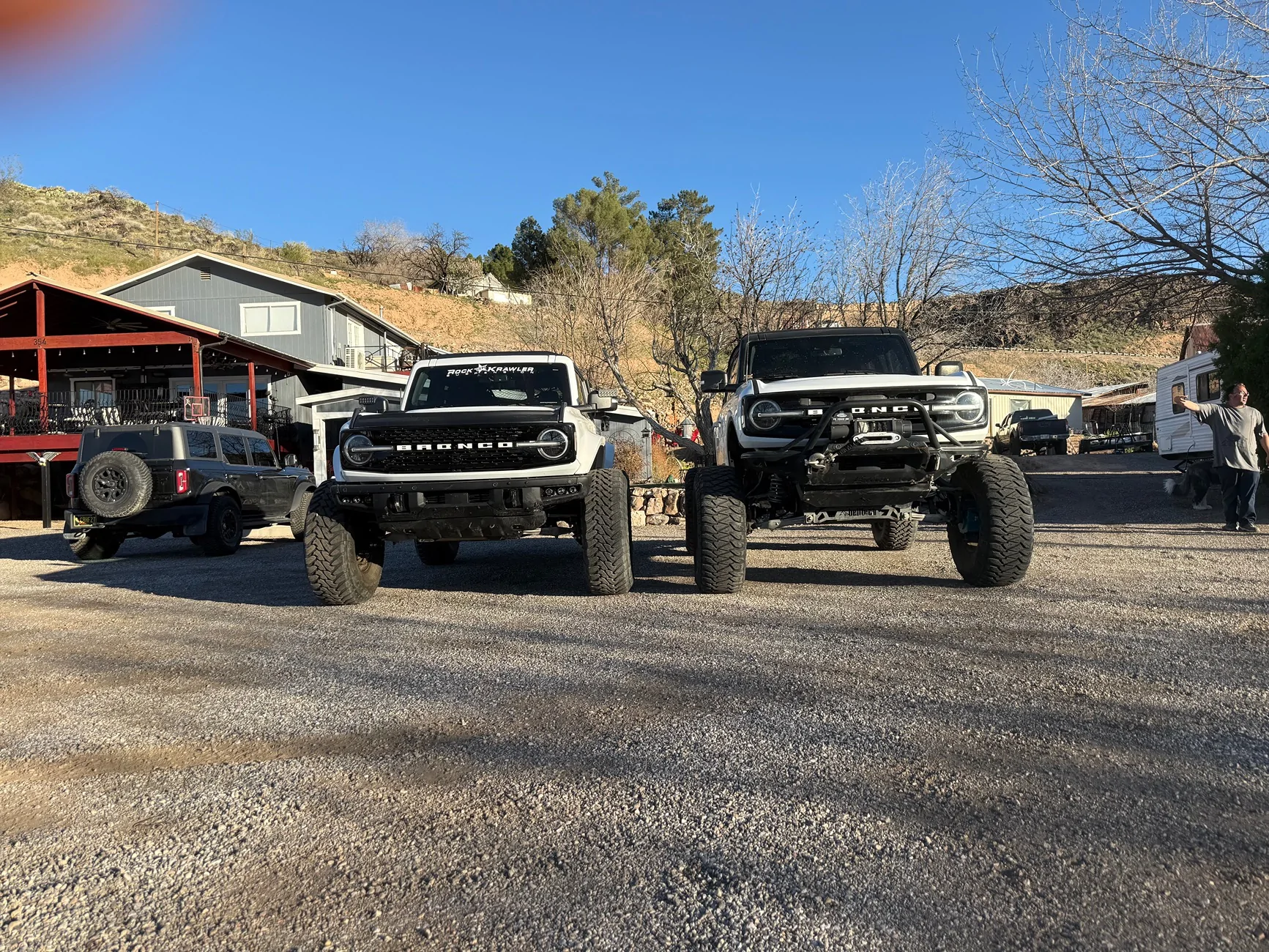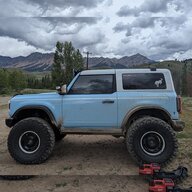

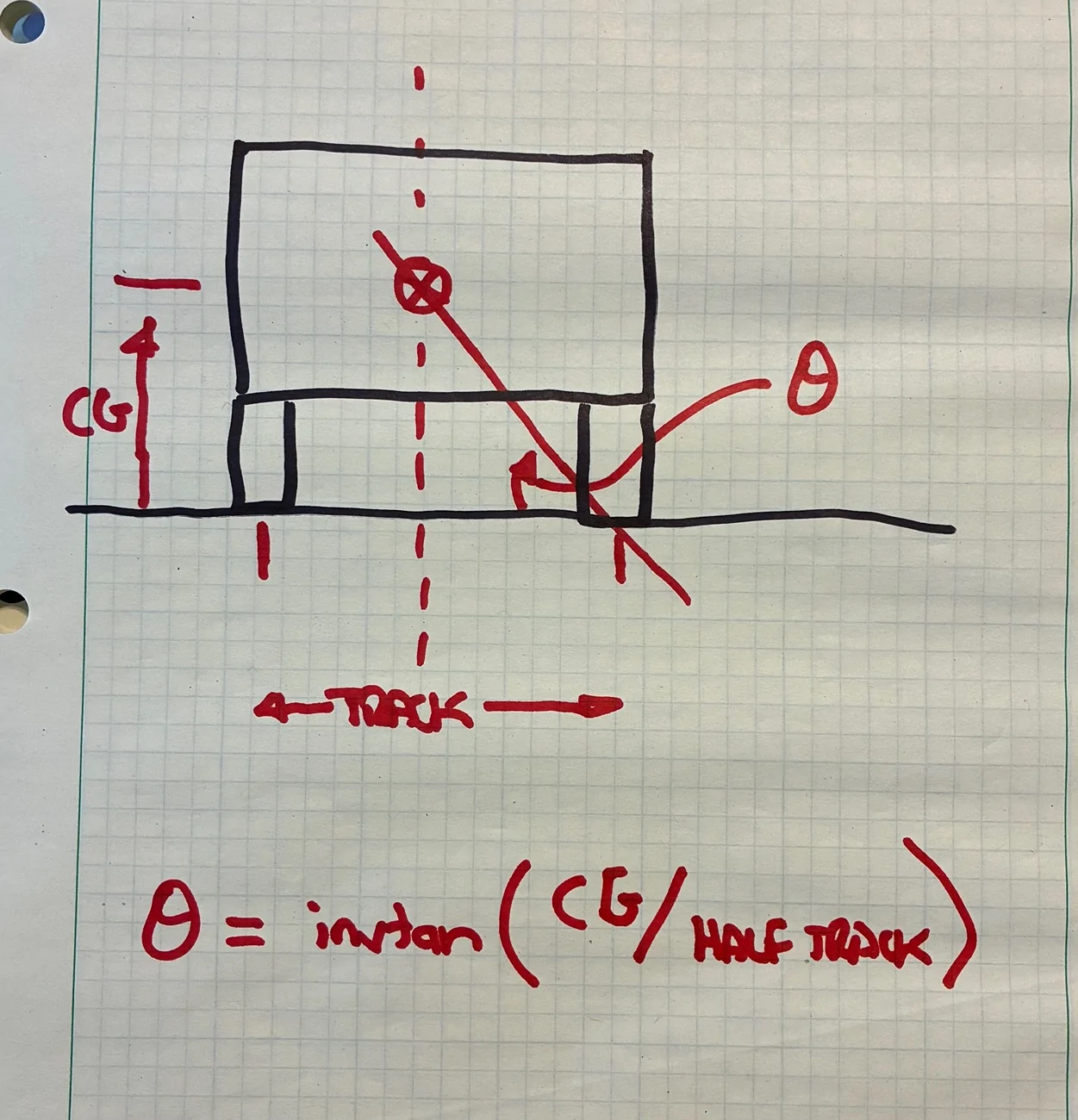
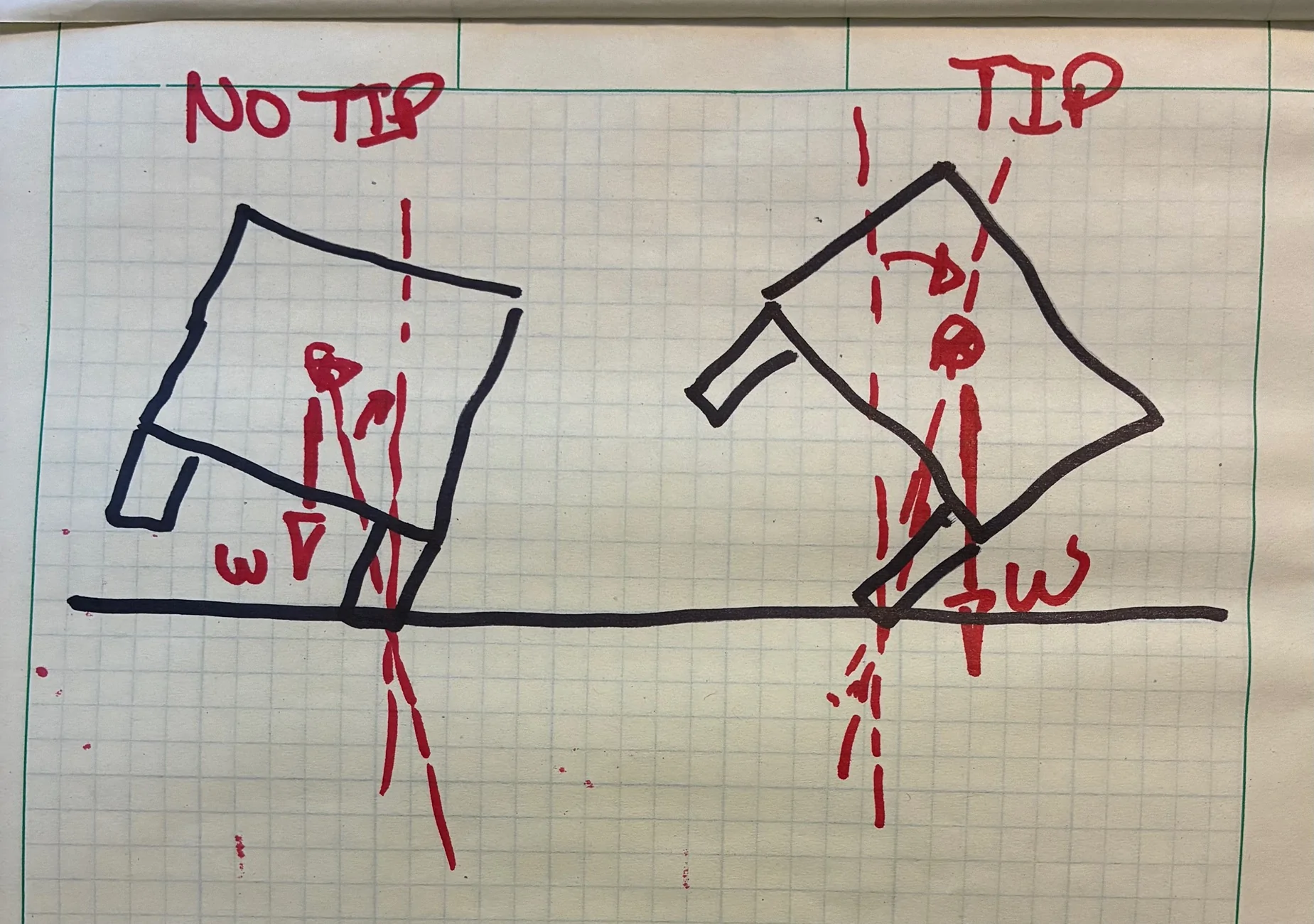
Just from a pure, very simplified, static loading perspective. You can calculate an angle metric for tipping, based on CG and track width. This is only useful for a basic comparison. It does not consider dynamic factors or suspension response, so just a giant static rigid block. But it does serve as a reasonable baseline for how CG and track width play together.
Like @5GENIDN said it is more complicated than this. The suspension dynamics can help or hurt the tipping response based on how everything is setup. However, the basic static geometry still provides the baseline and it is always best to start from a good baseline.
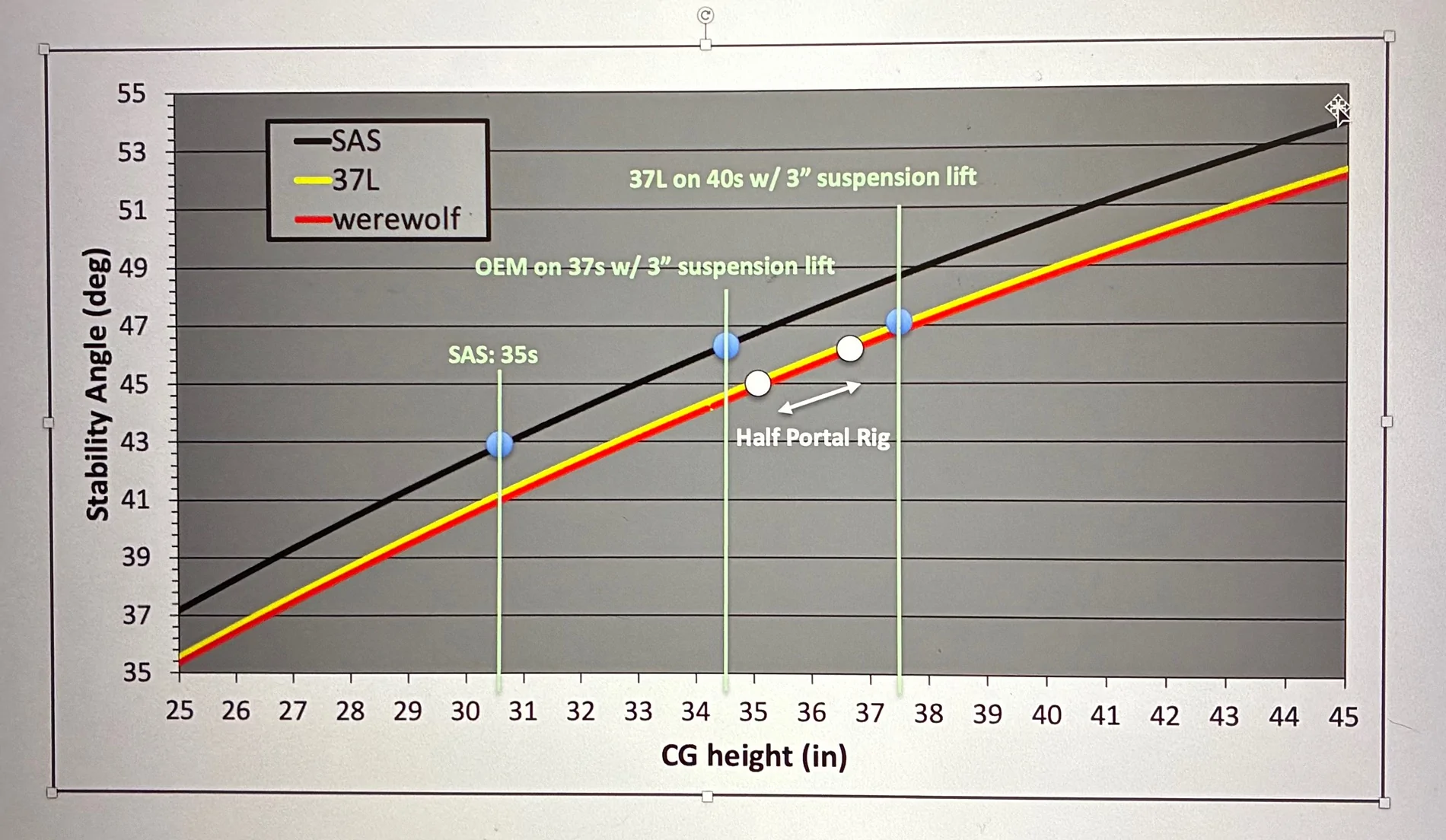
Some plots attached. Notice the added width for the portal rig on 40s makes tipping angle metric similar to a typical build on 37s, but much improved ground clearance. The half portal rig on the plot is what @SierraBronco was trying to achieve with his CG location.


Like @5GENIDN said it is more complicated than this. The suspension dynamics can help or hurt the tipping response based on how everything is setup. However, the basic static geometry still provides the baseline and it is always best to start from a good baseline.
Some plots attached. Notice the added width for the portal rig on 40s makes tipping angle metric similar to a typical build on 37s, but much improved ground clearance. The half portal rig on the plot is what @SierraBronco was trying to achieve with his CG location.
Sponsored