
Sponsored


- Joined
- Nov 16, 2017
- Threads
- 0
- Messages
- 92
- Reaction score
- 151
- Location
- Center Valley, PA
- Vehicle(s)
- Mercedes E350
- Your Bronco Model
- Black Diamond
That was my logic. I equate it to football....Big people beat little people.Here’s my philosophy. 2.7=more power/more fun and it’s what I want. DONE.
- First Name
- Jake
- Joined
- Jan 4, 2020
- Threads
- 11
- Messages
- 2,332
- Reaction score
- 7,044
- Location
- various, construction engineer.
- Vehicle(s)
- '13 SLK55 AMG, '15 Indian Chief, '15 WRX
- Your Bronco Model
- Badlands
- Banned
- #93
half-right and a very common old wives tale. Yes, Octane will raise the ignition temp requirements of the fuel-air mixture. No, it does not burn slower, just takes more temp to start burning (if it pre-ignites, will be pushing down on a piston trying to come up more than it normally would, can damage pistons as well). Keeps pre-ignition at bay longer, allowing higher compression and more favorable valve timing. It won't burn until the spark (very hot) is commanded, much hotter than the generalized hot spots in a cylinder that might cause pre-ignition.No you can not......octane is the measurement of the volatility of the fuel......the higher the octane the slower it burns.......putting high octane fuel in an engine designed for regular octane fuel is just a waste of money.
Once the combustion process begins, the flame front speed is the same, the exothermic temps generated from the reaction are high enough to light off all Octane permutations of air-fuel you would be likely to introduce into the engine.

- Banned
- #94
You may not feel the difference but it doesn't mean it's not there. There is a 4.5% power gain in the 2.7 using premium . High octane gas allows for more advanced timing = more power.No you can not......octane is the measurement of the volatility of the fuel......the higher the octane the slower it burns.......putting high octane fuel in an engine designed for regular octane fuel is just a waste of money.
Many folks have spent far more money chasing 15hp than putting in a tank of premium.
I think it is smart to run premium in either Bronco engine if you desire to run it at full potential...

- First Name
- Rick
- Joined
- May 15, 2021
- Threads
- 0
- Messages
- 56
- Reaction score
- 70
- Location
- Washington
- Vehicle(s)
- 2015 JKU Rubicon / 2017 JK Recon
- Your Bronco Model
- Badlands
I drove a Jeep Renegade with the 1.4 turbo for a couple of years. It was stated that the engine preferred premium fuel, but you could use regular. The time I could notice a difference is when the turbo kicked in. It felt smoother and like it was giving me extra boost. I ran it with regular unleaded most of the time, but if I felt like I wanted to have a little extra fun on the road that week I'd do premium. Honestly, that 2wd manual 1.4 Renegade was a fantastic street vehicle. Lots of room and surprisingly fun to drive.Genuinely curious for anyone who has a vehicle that has different power outputs based on octane ratings; can you actually tell the difference?
Sponsored
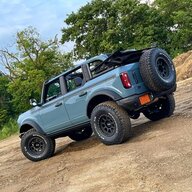
Oh Boy, sooooo much to unpack here lol. Ok you going for Lux interior well what about exterior? OB/WT are what I call lux in and out (gloss grill/gloss mirrors/matched door handles...). BL on the other hand is ruggedly stylish. Grill is styled nice but MIC gray adds the ruggedness. MGV rugged but black adds stylish to it.I’m indecisive as hell, right now I’m split between OBX and BL which is a ridiculous conundrum on its own. Lux and tow with either one, MGV with BL, leather with OBX. The roast leather with the OBX is my favorite interior, but I’ve got some hopes still languishing that the WT leather interior just photographs poorly and actually looks good in person in which case just blow up my decision tree and start again.
OB roast uggg the cloth looks better than the leather IMO. WT leather... NO WAY. Pictures don't lie... what color?
OP
OP
- Thread starter
- #97
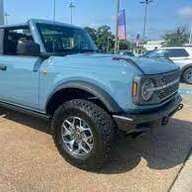
I prefer the lux exterior with matching handles/mirrors, but that said, either way I’m going to go with the body color mod top (assuming that still going to be available for 22) so that mitigates that factor a bit. I really prefer the bigger tires of the BL, but don’t know that I need to go full squatch.Oh Boy, sooooo much to unpack here lol. Ok you going for Lux interior well what about exterior? OB/WT are what I call lux in and out (gloss grill/gloss mirrors/matched door handles...). BL on the other hand is ruggedly stylish. Grill is styled nice but MIC gray adds the ruggedness. MGV rugged but black adds stylish to it.
OB roast uggg the cloth looks better than the leather IMO. WT leather... NO WAY. Pictures don't lie... what color?
I do like the OBX leather. The only good part about waiting until 22 is that hopefully I get to see some of these things like that WT leather in person.

- First Name
- Max
- Joined
- Feb 9, 2021
- Threads
- 1
- Messages
- 28
- Reaction score
- 41
- Location
- Hingham, Massachusetts.
- Vehicle(s)
- 2019 Ecoboost Premium Convertible
- Your Bronco Model
- Outer Banks
I always run regular in my 2.3 EcoBoost. Ford states it will make more power on Premium, but it feels just fine the way I drive it. Plenty of power, 43k miles without a problem, and two cross country and back trips. Assuming the Bronco is heavier and will be beat on a little more, I opted for the 2.7. Both, however, are great engines. I know a Ford employee who dailies a 2.3 Focus RS (with Mustang EcoBoost heads swapped in at 40k-50k miles) and now has over 200k miles on it.Genuinely curious for anyone who has a vehicle that has different power outputs based on octane ratings; can you actually tell the difference?
- First Name
- Matt
- Joined
- Jul 28, 2020
- Threads
- 8
- Messages
- 107
- Reaction score
- 230
- Location
- Palm Coast, FL
- Vehicle(s)
- 21 Bronco OBX and 24 Ranger XLT
- Your Bronco Model
- Outer Banks
After driving my brother's 2020 Ranger, I was quite impressed with the 2.3 it has. I think that if people saw a Bronco sitting on the lot that had a 2.3 in it, they would happily buy it and not be disappointed. I did opt for the 2.7, but I'm coming from a 3.5 Ecoboost F150. So in my own mind, I justified going from twin turbos to twin turbos. (I laughed out loud at the comment that said no way those turbos will last 100k miles)
In the end, I think if Ford had ONLY given the 2.3 as an option for the Bronco, it would have been adequate for the vehicle. I am glad that they do offer the 2.7 though..
In the end, I think if Ford had ONLY given the 2.3 as an option for the Bronco, it would have been adequate for the vehicle. I am glad that they do offer the 2.7 though..

- First Name
- Joseph
- Joined
- Jul 28, 2020
- Threads
- 2
- Messages
- 112
- Reaction score
- 192
- Location
- Satellite Beach, FL
- Vehicle(s)
- Ford Maverick
- Your Bronco Model
- Base
I can in my current vehicle, around town with premium it feels peppier and gets going much nicer. However, on the highway, there really is no difference at all, so I fill up depending on my anticipated usage for the week!Genuinely curious for anyone who has a vehicle that has different power outputs based on octane ratings; can you actually tell the difference?
Sponsored
Perfect description. 2.3 will be just fine; 2.7 more of a rocket.After driving my brother's 2020 Ranger, I was quite impressed with the 2.3 it has. I think that if people saw a Bronco sitting on the lot that had a 2.3 in it, they would happily buy it and not be disappointed. I did opt for the 2.7, but I'm coming from a 3.5 Ecoboost F150. So in my own mind, I justified going from twin turbos to twin turbos. (I laughed out loud at the comment that said no way those turbos will last 100k miles)
In the end, I think if Ford had ONLY given the 2.3 as an option for the Bronco, it would have been adequate for the vehicle. I am glad that they do offer the 2.7 though..

Divorce lawyers would argue that they can and have.You can't put a $ figure on regret
- Banned
- #103
I lol at the fact that you put that must trust on one of the most failure prone parts of that engine and your getting 2 dunk em good in the mud and call me at 100000 .Perfect description. 2.3 will be just fine; 2.7 more of a rocket.
Dude I'll never hit 100, will flip before especially being the first run.I lol at the fact that you put that must trust on one of the most failure prone parts of that engine and your getting 2 dunk em good in the mud and call me at 100000 .
If you want the 2.7 just buy it, why make up some BS scenario where it works out on paper for you? If you "think" you might want more power than the 2.3 gives then you might also want more power than the 2.7 gives on low octane so just as well to plan on running premium in both.So I've been giving the 2.3L vs 2.7L engine a lot of thought and I think that I may have come up with a way in which the 2.7 may wind up actually being cheaper, and yes, this is me totally trying to justify the bigger engine to myself. Let's say, just for the sake of simplicity that I'm going to drive the Bronco for 100k miles. Also for the sake of simplicity, let's say that the truck is going to be SAS, so the comparable MPGs would be 18 (2.3) vs 17 (2.7).
Yes, I know I could run regular in either of them, but just for these purposes let's say that I want some degree of extra power beyond what the 2.3 gets on regular. If I went ahead and ran premium on the 2.3 in order to get the full specs vs regular on the 2.7 where I'd still get 315 hp/410 torque which is plenty. In my area right now, regular is $2.99 and premium is $3.94. So here's how that lands over 100k miles (obviously gas prices will vary here, but again just for simplicity's sake).
Cost to drive 2.3 SAS 100k miles with premium fuel at $3.94/gal and 18 MPG = $21,889.
Cost to drive 2.7 SAS 100k miles with regular fuel at $2.99/gal and 17 MPG = $17,588
Delta between the 2 = $4,301
Cost to add 2.7 to build = $1,895
Long term savings = $2,406
Thanks for patronizing me on my quest to justify my decisions to myself.
If you only run premium in the 2.3 when you actually needed it, when would that be? Probably only when hot or towing as those are the two times using premium actually makes a noticeable difference for an ecoboost engine. In that case you better recalculate your numbers and go with 10k miles of premium and 90k miles of regular which means you can't justify the 2.7 LOL
Sponsored


