
Sponsored

OP
OP


- First Name
- Jonathan
- Joined
- Dec 7, 2021
- Threads
- 8
- Messages
- 374
- Reaction score
- 509
- Location
- Tucson, AZ
- Vehicle(s)
- FJ Cruiser [sold]
- Your Bronco Model
- Badlands
- Thread starter
- #107
I saw that and thought it was pretty cool. I was a little concerned about the heat for the compressor itself but not sure that's a huge issue.After going through this thread i'm second guessing the AGS mount versus this solution for the ARB. Probably a little easier to route, etc. Has anyone done this one? Thoughts on it?
https://dv8offroad.com/collections/.../products/bronco-air-compressor-mount-storage
It seemed like you'd be running the wires almost as far though perhaps a little easier than routing through the tail gate.
In my case, I value that storage area for a few things whereas the AGS uses otherwise unused space.

Same. I know it sounds silly to a lot of people, but every square inch of space saved is pretty important when I’m on a 4 day overland without a roof rack.In my case, I value that storage area for a few things whereas the AGS uses otherwise unused space.

- First Name
- Chris
- Joined
- Nov 30, 2023
- Threads
- 4
- Messages
- 19
- Reaction score
- 31
- Location
- Orlando, FL
- Vehicle(s)
- Bronco Raptor, Rubicon 4xe, F150 Raptor
- Your Bronco Model
- Raptor
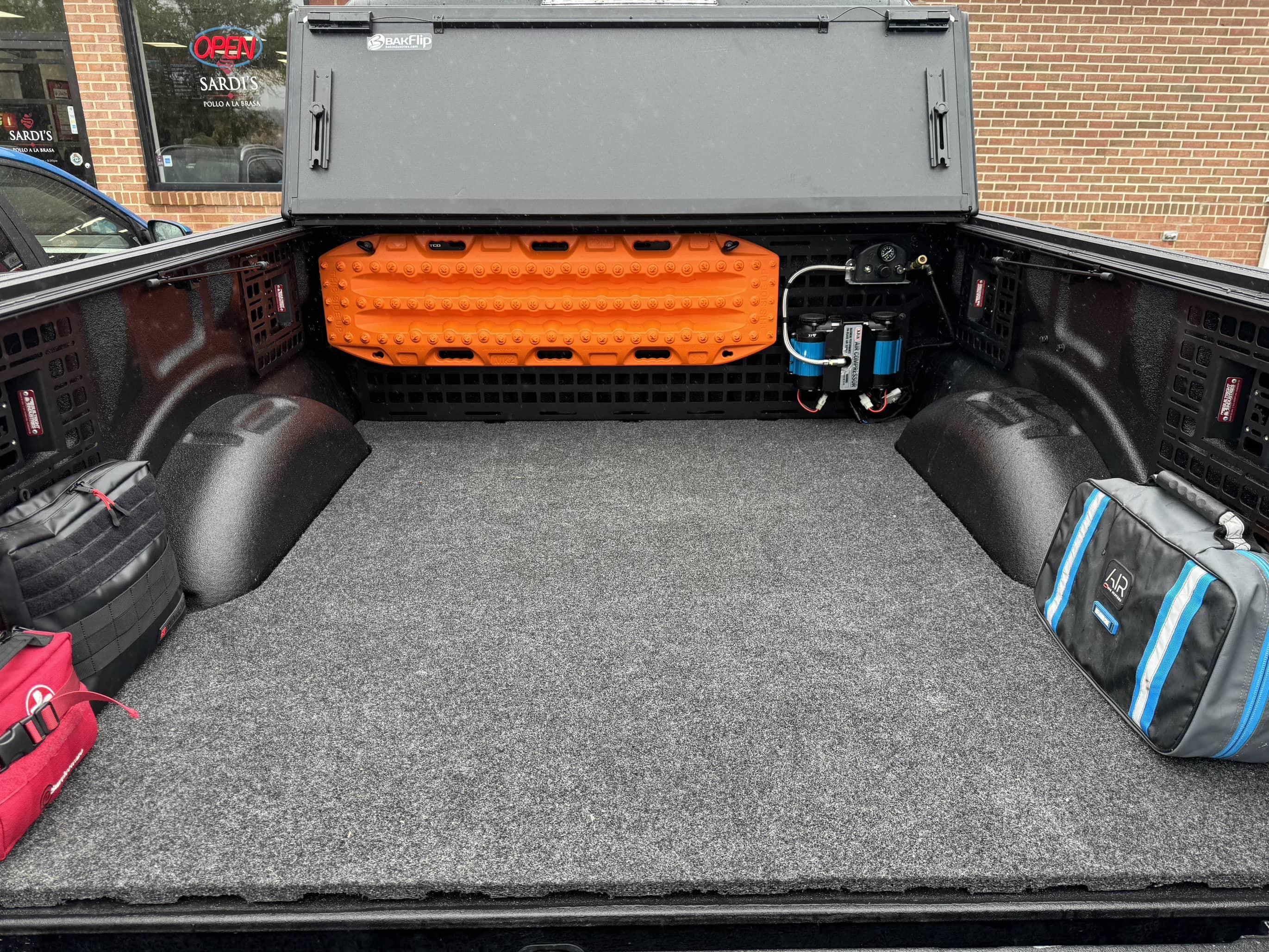
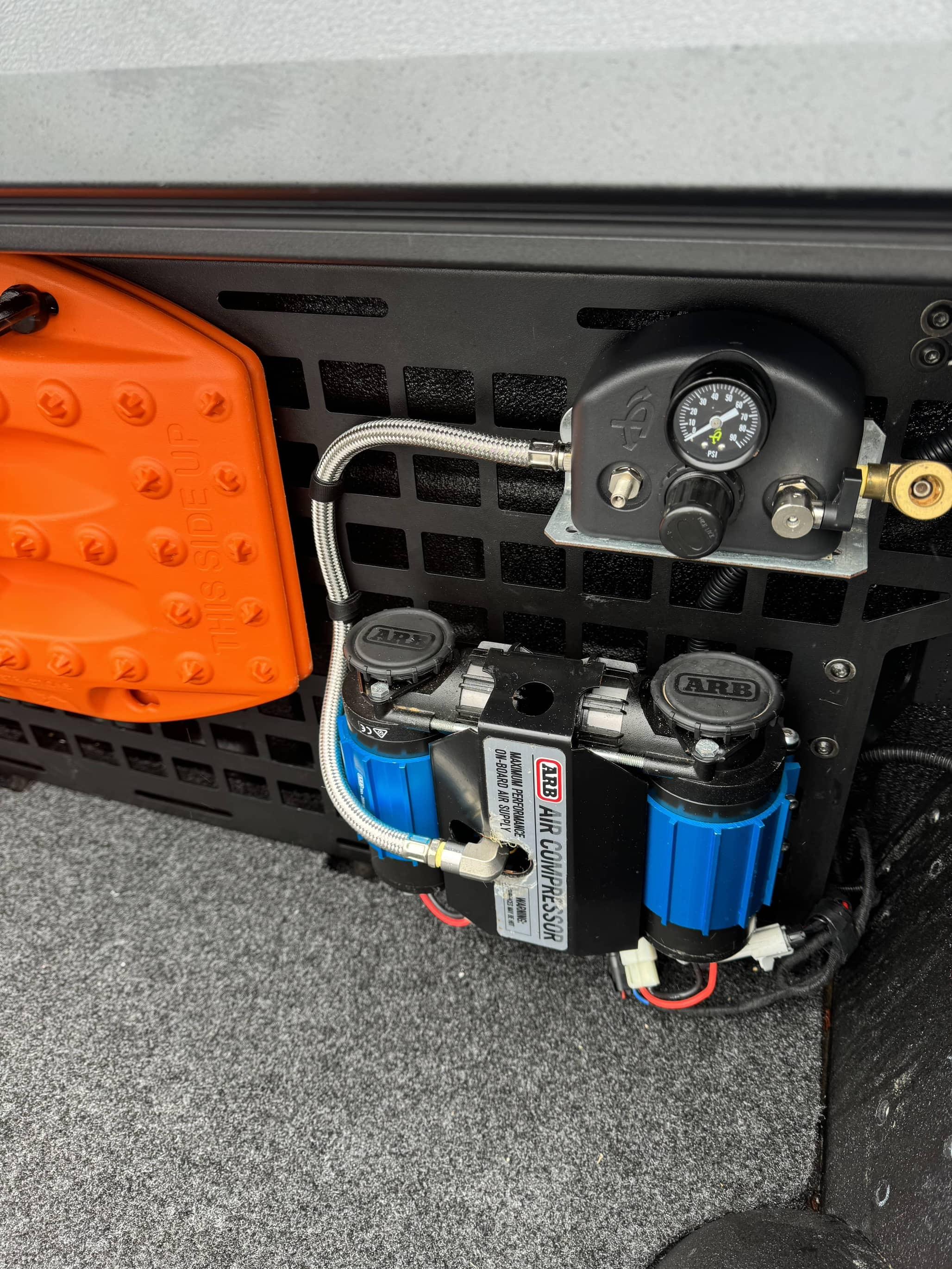
For what it’s worth, I’ve had this exact compressor in the bed of my F150 Raptor for years. No issues with the wire run and I used an extension harness initially and later cut it to size with WeatherPack connectors when I relocated it to a bedside molle panel. I never even blew a fuse with that setup. I’m no electrical engineer, but I can speak to a similar use case and share my experience, for whatever it’s worth.Whoa Broncos. There are a lot of assumptions going on here. I have some questions.
1st.
Should you actually be mounting the compressor exterior on the rear gate?
ARB's compressor motors are IP55 rated. They are not meant to handle fine dust or "direct jet spray". Isn't that what it will get? This is a down draft position. 60+mph down a freeway meets that direct jet standard. ARB recommends under the hood or an interior mount location - away from direct exposure to water and dust. Is this enabling early failure? And what about the electrical connection points to the motors?
2nd.
What are you really gaining from this location?
Spending $300+ and putting it on the rear gate isn't really moving it any closer to all 4 tires.
For $40 you can buy hood struts.
Or for $65 you could buy more hose, a covered connector, nuts & bolts, and angle iron and mount it on your bumper, like several members have done. This is my plan.
3rd.
ARB rates the compressors under load at 50 amps each - not 40 amps. Their wiring gauges are for SHORT runs. The 40A fuses are used as a safety measure. It will blow sooner than a 50A. With the gate location, the wire has gone from a 5-6 foot length to 25 feet plus. You should be using two (2) 4AWG wire for this length. This is power transfer, not chassis wiring. The ratings are different. If you are going to be airing up everybody, 2AWG would be better. These are 100% duty cycle motors which will heat up. Don't be surprised if the 10AWG wire at the motor connection melts the insulation.
I’ll add that the Raptor doesn’t have an engine mount option that I’m aware of so this is very attractive to me.
Having wired off road travel trailers, and having done the whole Redarc Redvision thing before, I’m a big fan of power distribution systems and busbars. A larger fused cable run is not a bad idea to something like the below mounted near or behind the subwoofer panel. An sPOD would be a similar and more expensive option.
Blue Sea Systems 2722 DualBus Plus 150A BusBar - 1/4 https://a.co/d/hREhEMr
Personally, I’m trying to work out a setup for a Redarc system with auxillary batteries and a LifePO4 bank. I just installed the DV8 cargo floor box to see what I can fit (BCDC vs Manager 30). If I can get it right, I’m simply going to tap the batteries in the cargo area for the compressor.
OP
OP
- First Name
- Jonathan
- Joined
- Dec 7, 2021
- Threads
- 8
- Messages
- 374
- Reaction score
- 509
- Location
- Tucson, AZ
- Vehicle(s)
- FJ Cruiser [sold]
- Your Bronco Model
- Badlands
- Thread starter
- #110
Thanks for the benefit of your experience. I haven't had any issues yet either though I've probably only used my ARB heavily 12-15 times.For what it’s worth, I’ve had this exact compressor in the bed of my F150 Raptor for years. No issues with the wire run and I used an extension harness initially and later cut it to size with WeatherPack connectors when I relocated it to a bedside molle panel. I never even blew a fuse with that setup. I’m no electrical engineer, but I can speak to a similar use case and share my experience, for whatever it’s worth.
I’ll add that the Raptor doesn’t have an engine mount option that I’m aware of so this is very attractive to me.
Having wired off road travel trailers, and having done the whole Redarc Redvision thing before, I’m a big fan of power distribution systems and busbars. A larger fused cable run is not a bad idea to something like the below mounted near or behind the subwoofer panel. An sPOD would be a similar and more expensive option.
Blue Sea Systems 2722 DualBus Plus 150A BusBar - 1/4 https://a.co/d/hREhEMr
Personally, I’m trying to work out a setup for a Redarc system with auxillary batteries and a LifePO4 bank. I just installed the DV8 cargo floor box to see what I can fit (BCDC vs Manager 30). If I can get it right, I’m simply going to tap the batteries in the cargo area for the compressor.


But wow. What an awesome setup you've got in your Raptor!
I really envy all that panel storage surface not to mention the overall storage area.
Sponsored
- First Name
- John
- Joined
- Apr 4, 2023
- Threads
- 1
- Messages
- 316
- Reaction score
- 767
- Location
- Los Angeles
- Vehicle(s)
- Expedition Max, Fusion Hybrid, BMW 5 Series, HD Road King
- Your Bronco Model
- Badlands
Kudos on the nice, clean install. And the clean bed.For what it’s worth
Your ARB is still inside an enclosed space against the cab wall (your bed cover encloses it). It is not mounted on the exterior of your bed gate. If it were on the outside of the bed gate, that would be a similar mount to the AGS mount. ... I do commend you on using a more protected location, in line with its IP rating.
Here's my point .
A lot of off-road stuff is minimally designed, under or not engineered, and provided bare minimum instructions. Much of it would fail minimum mil-spec = the environment you are going into with it.
I was offering more information relevant to what the owner's intended use is. Something sorely lacking by the off-road vendor community. At a minimum, I hoped it gave pause before owners were spending money and time on an incomplete solution.
OP
OP
- First Name
- Jonathan
- Joined
- Dec 7, 2021
- Threads
- 8
- Messages
- 374
- Reaction score
- 509
- Location
- Tucson, AZ
- Vehicle(s)
- FJ Cruiser [sold]
- Your Bronco Model
- Badlands
- Thread starter
- #112
I have to agree it's entirely more protected there than with the AGS. To their credit, AGS provided a solution where air is drawn from the cabin so the intake is relatively clean. Regarding moisture to the exterior, I'm not sure how much worse it is than under the hood except maybe when raining.Kudos on the nice, clean install. And the clean bed.
Your ARB is still inside an enclosed space against the cab wall (your bed cover encloses it). It is not mounted on the exterior of your bed gate. If it were on the outside of the bed gate, that would be a similar mount to the AGS mount. ... I do commend you on using a more protected location, in line with its IP rating.
I do appreciate all your points about that and the length of the wire run. It's definitely something to consider before jumping in. If it ever does fail, I'd probably reconsider the location. It's convenient but opening the gate wouldn't really be all that much of a hassle though I don't like giving up any valuable store space so maybe under the seat.
- First Name
- Chris
- Joined
- Nov 30, 2023
- Threads
- 4
- Messages
- 19
- Reaction score
- 31
- Location
- Orlando, FL
- Vehicle(s)
- Bronco Raptor, Rubicon 4xe, F150 Raptor
- Your Bronco Model
- Raptor
@Doc TOC I appreciate the feedback. It may very well help folks make informed decisions.Kudos on the nice, clean install. And the clean bed.
Your ARB is still inside an enclosed space against the cab wall (your bed cover encloses it). It is not mounted on the exterior of your bed gate. If it were on the outside of the bed gate, that would be a similar mount to the AGS mount. ... I do commend you on using a more protected location, in line with its IP rating.
Here's my point .
A lot of off-road stuff is minimally designed, under or not engineered, and provided bare minimum instructions. Much of it would fail minimum mil-spec = the environment you are going into with it.
I was offering more information relevant to what the owner's intended use is. Something sorely lacking by the off-road vendor community. At a minimum, I hoped it gave pause before owners were spending money and time on an incomplete solution.
I trust ARB 100% and I feel like they are on another level. Their stuff is designed and tested for the Outback, they have a proven track record of manufacturing in the off road / overland / Australian "caravan" markets. I hear you on vendors who may just be reselling product, but I just don't see ARB or even @AGSOFFROAD falling into this category.
Your comment on the IP55 rating and "direct jet spray" made me pause for a moment, but these compressors are often mounted in weird places like truck frames and used in rough environments, which is why filter relocation kits are offered. The IP rating conflicts with this statement from their website, but I was able to grab this from their Australian page:
ARB compressors are IP sealed, protecting them against both water and dust ingress. The result is a product which can be mounted virtually anywhere, even in submergible locations. The only requirement when mounting a compressor in a location that may be submerged is that the air intake is relocated to a permanently dry location. Other than this, the compressor can be wherever you desire; mounted under seats, under bonnets, on the frame of your car.
This is under the "WHERE IS THE BEST PLACE TO MOUNT A COMPRESSOR?" section at https://www.arb.com.au/air-compressors-tyre-accessories/air-compressors/
For me, the bottom line is this appears to be the most convenient location on a Braptor and ARB will back this thing up for at least 3 years. Even beyond then, their stuff is easily rebuildable and I expect to replace things on an off-road vehicle. For sudden failure, the likelihood BOTH compressors on the twin model fail at the same time, when I need it most, is also unlikely.
Hope this helps someone...
Last edited:
- First Name
- Chris
- Joined
- Nov 30, 2023
- Threads
- 4
- Messages
- 19
- Reaction score
- 31
- Location
- Orlando, FL
- Vehicle(s)
- Bronco Raptor, Rubicon 4xe, F150 Raptor
- Your Bronco Model
- Raptor
I trust ARB 100%...
I fully recognize these could easily be someone's famous last words. Thank god for e-lockers.For sudden failure, the likelihood BOTH compressors on the twin model fail at the same time, when I need it most, is also unlikely.
Last edited:
Wanted to get some thoughts on options for wiring to the upfitter switches.
Currently, I have already run the Expedition Essentials extension harness through the tailgate and to the b-pillar. From there I will connect to the ARB harness for the run through the firewall.
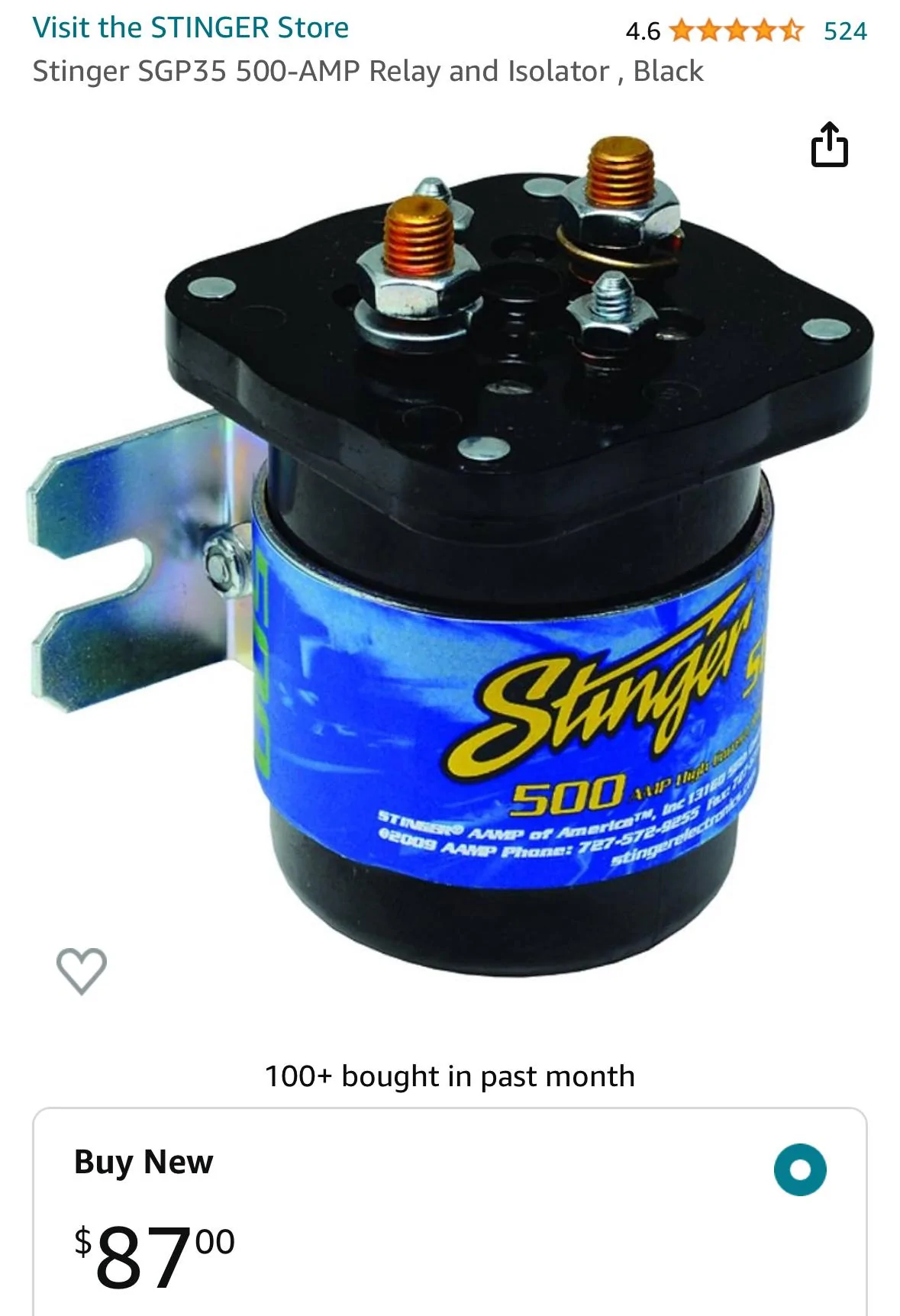
I was considering running power/ground/switch wire to a 500-amp Stinger relay similar to how I have run my winch. I’m assuming I can’t use the same relay and will need to have a dedicated relay for the compressor, right?
This is from my winch install. Winch power cable and upfitter switch wire in; power cable to battery, and ground out.


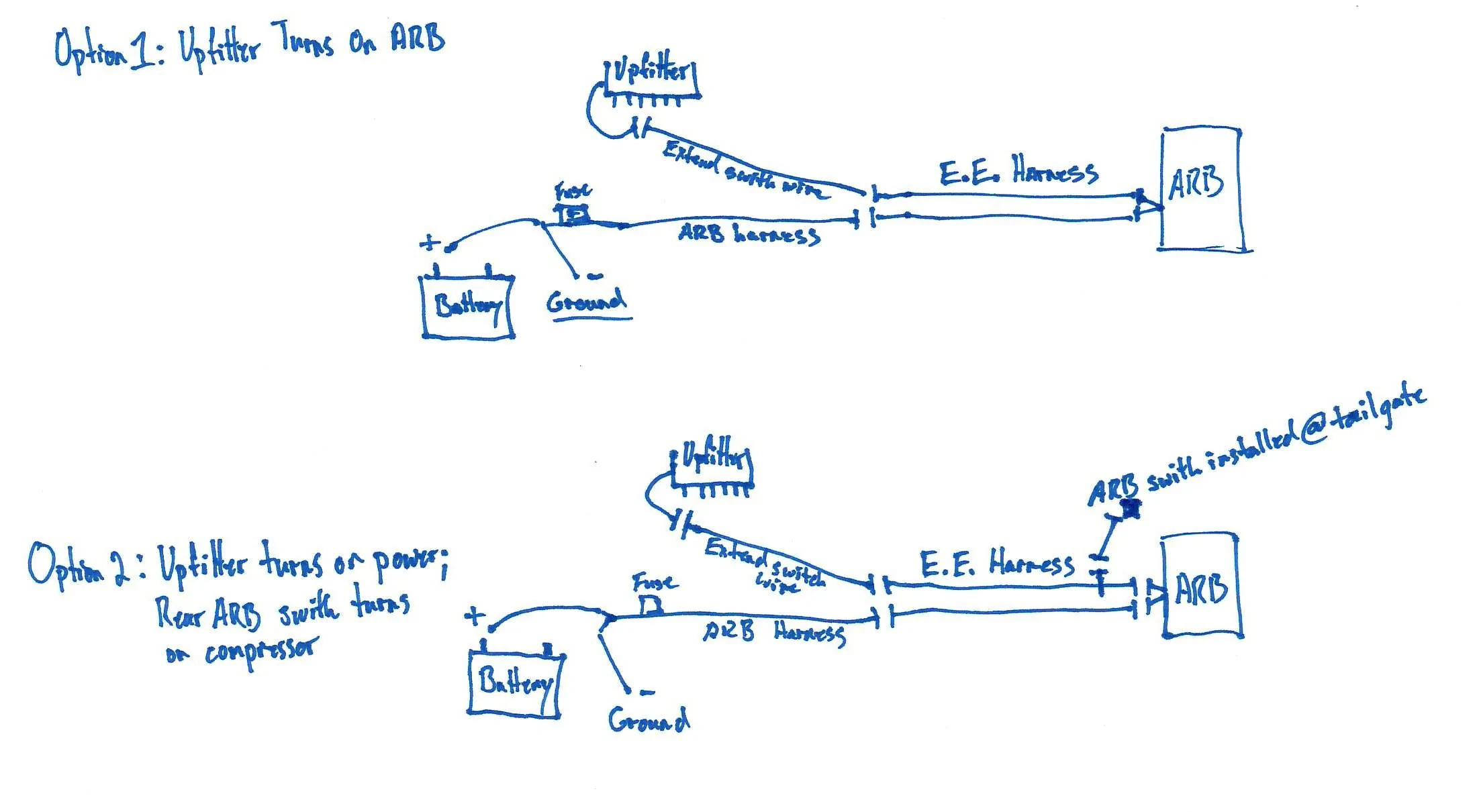
So we have the purple ARB switch wire. Thinking about installing that switch at the back. From the harness I could ground the negative, wire ARB power to relay, upfitter switch wire to relay, ground out from relay, power cable to batter from relay. Then that should send power to the compressor when the upfitter is switched on. Then I could have the ARB switch installed in the back connected with the purple wire that would control on/off for the compressor.
The other option would be to connect the purple switch wire to the upfitter so it just turns on when I hit the upfitter switch.
Would be interested to know thoughts and how you guys have done this. Thanks!
Currently, I have already run the Expedition Essentials extension harness through the tailgate and to the b-pillar. From there I will connect to the ARB harness for the run through the firewall.
I was considering running power/ground/switch wire to a 500-amp Stinger relay similar to how I have run my winch. I’m assuming I can’t use the same relay and will need to have a dedicated relay for the compressor, right?
This is from my winch install. Winch power cable and upfitter switch wire in; power cable to battery, and ground out.
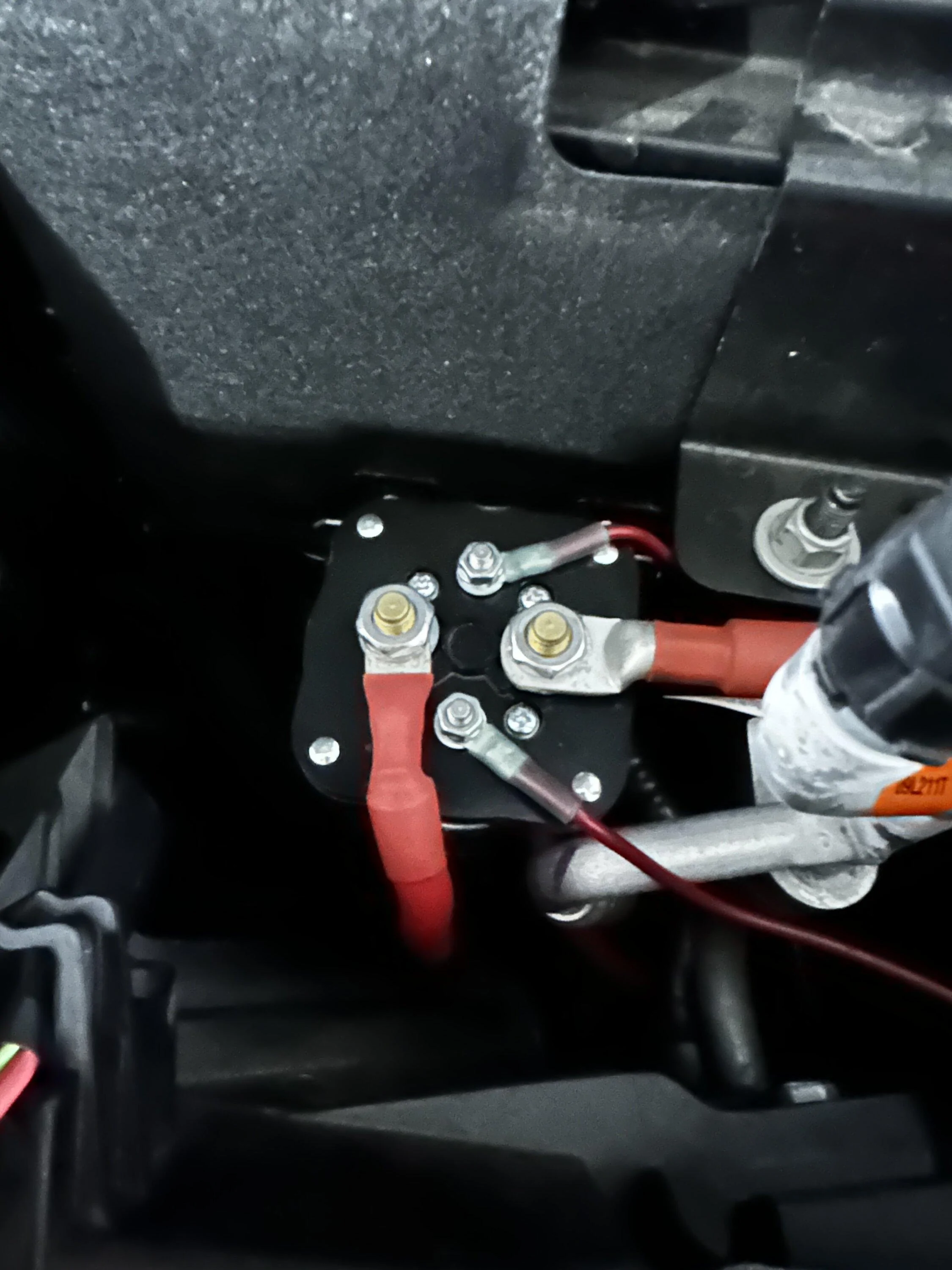
So we have the purple ARB switch wire. Thinking about installing that switch at the back. From the harness I could ground the negative, wire ARB power to relay, upfitter switch wire to relay, ground out from relay, power cable to batter from relay. Then that should send power to the compressor when the upfitter is switched on. Then I could have the ARB switch installed in the back connected with the purple wire that would control on/off for the compressor.
The other option would be to connect the purple switch wire to the upfitter so it just turns on when I hit the upfitter switch.
Would be interested to know thoughts and how you guys have done this. Thanks!
Sponsored
OP
OP
- First Name
- Jonathan
- Joined
- Dec 7, 2021
- Threads
- 8
- Messages
- 374
- Reaction score
- 509
- Location
- Tucson, AZ
- Vehicle(s)
- FJ Cruiser [sold]
- Your Bronco Model
- Badlands
- Thread starter
- #116
So you intend to have a relay controlled by the aux switch controlling the overall power to the ARB and then a switch for its internal relay in the back?Wanted to get some thoughts on options for wiring to the upfitter switches.
Currently, I have already run the Expedition Essentials extension harness through the tailgate and to the b-pillar. From there I will connect to the ARB harness for the run through the firewall.
I was considering running power/ground/switch wire to a 500-amp Stinger relay similar to how I have run my winch. I’m assuming I can’t use the same relay and will need to have a dedicated relay for the compressor, right?
This is from my winch install. Winch power cable and upfitter switch wire in; power cable to battery, and ground out.
So we have the purple ARB switch wire. Thinking about installing that switch at the back. From the harness I could ground the negative, wire ARB power to relay, upfitter switch wire to relay, ground out from relay, power cable to batter from relay. Then that should send power to the compressor when the upfitter is switched on. Then I could have the ARB switch installed in the back connected with the purple wire that would control on/off for the compressor.
The other option would be to connect the purple switch wire to the upfitter so it just turns on when I hit the upfitter switch.
Would be interested to know thoughts and how you guys have done this. Thanks!
Is that not overkill? Why not just wire the aux switch to the relay power on the ARB? If you want both switches so the rear one doesn't accidentally turn it on or so you could cut it from the front, you could just have the aux switch provide the power to your rear mounted switch--then both would have to be on but no extra relay required.
If the intent is to avoid all that power going all the way to the back when it's not needed, I kind of get that but...overkill?
IIRC one of the main reasons using the 500-amp relay on the winch was to prevent having the winch connected straight to the battery all of the time when not in use. I was thinking that may also be appropriate with the ARB being that there are concerns about power draw on that long of a run. But I'm certainly not an electrical engineer by any means.So you intend to have a relay controlled by the aux switch controlling the overall power to the ARB and then a switch for its internal relay in the back?
Is that not overkill? Why not just wire the aux switch to the relay power on the ARB? If you want both switches so the rear one doesn't accidentally turn it on or so you could cut it from the front, you could just have the aux switch provide the power to your rear mounted switch--then both would have to be on but no extra relay required.
If the intent is to avoid all that power going all the way to the back when it's not needed, I kind of get that but...overkill?
Please bear with my kindergarten grade schematic, but I thought a visual may be helpful. These are the two options I'm thinking through now unless there are other recommended options.
OP
OP
- First Name
- Jonathan
- Joined
- Dec 7, 2021
- Threads
- 8
- Messages
- 374
- Reaction score
- 509
- Location
- Tucson, AZ
- Vehicle(s)
- FJ Cruiser [sold]
- Your Bronco Model
- Badlands
- Thread starter
- #118
1) Your winch may have controls on it that would enable even a passerby to just start winching. That wouldn't be the case for the compressor assuming the switch is in the cabin somewhere as there are no such controls on the compressor itself. Just saying that. I don't think that's your concern but just wanted to throw that out there.IIRC one of the main reasons using the 500-amp relay on the winch was to prevent having the winch connected straight to the battery all of the time when not in use. I was thinking that may also be appropriate with the ARB being that there are concerns about power draw on that long of a run. But I'm certainly not an electrical engineer by any means.
Please bear with my kindergarten grade schematic, but I thought a visual may be helpful. These are the two options I'm thinking through now unless there are other recommended options.

2) So, in early EE (I changed to CSc so that's all the EE I'm working with), I was taught electricity flows through the wires. Now-a-days, I hear it's much more complex involving fields and I don't totally get it. That said, conventional wisdom was that, unless switched on, there should be no draw through the device. Presumably, its internal relay requires power from the switched power and the relay itself is off when there's no power (using no power to stay in the off state). We don't really get to see the circuit inside the compressor so who knows if there's a capacitor charging constantly or something--I have to trust ARB that there's not. I'm not sure this is your concern either.
3) Totally separate from that, we have a long wire run. This does use some of our potential but, as far as I know, that power loss is while the device is using the power (i.e., it is switched "on"). Again, going back to inductance and the field that may be created by the potential of electricity running through that long wire that I don't understand, there may be some potential loss when off but I really think it's negligible.
4) Finally, maybe you're just uncomfortable with that 40A potential going through that long run--every inch increasing the probability it'll get pinched, cut, or melt. I totally get that. In this case, we have to trust our breaker (non-auto-reset in my case as I have my trust issues too) or fuses. If you don't trust that, maybe you do want it manually switched and I don't think you're crazy if you do.
OP
OP
- First Name
- Jonathan
- Joined
- Dec 7, 2021
- Threads
- 8
- Messages
- 374
- Reaction score
- 509
- Location
- Tucson, AZ
- Vehicle(s)
- FJ Cruiser [sold]
- Your Bronco Model
- Badlands
- Thread starter
- #120
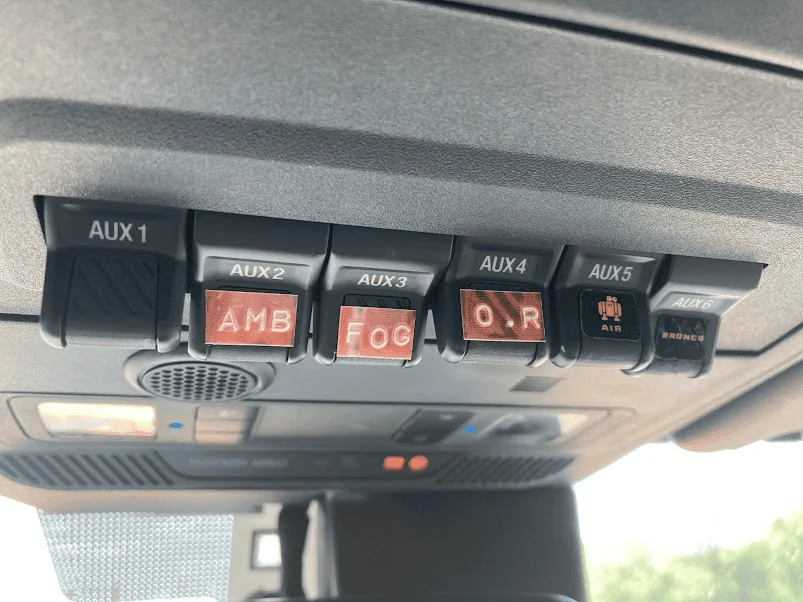
Too lazy to go outside right now so luckily smart search is a thingWhich upfitter did you go with? I have 30, 15, and one 10 left.

Looks like I used Aux 5. I kept saving the heavier current ones as I went and (not shown in this image) is I used Aux 1 for our mirror ditch lights which are the only thing I'm using that don't have a built-in relay and are powered directly through the switch--they are very low draw.
Sponsored
Similar threads

- Replies
- 6
- Views
- 811


- Replies
- 4
- Views
- 4,439
- Replies
- 0
- Views
- 686

- Replies
- 15
- Views
- 8,236