
Sponsored
Recommendations to improve long term reliability?
- Thread starter 2021FordBronco2
- Start date
- Watchers 7

- First Name
- Peter
- Joined
- Dec 3, 2021
- Threads
- 8
- Messages
- 462
- Reaction score
- 814
- Location
- Kingman AZ
- Vehicle(s)
- 2023 Bronco 2Dr - 2022 Bronco Raptor
- Your Bronco Model
- Base
Quick thought on battery charge... We have a 2dr and Raptor. Battery charge seems to stay up if we keep doors locked (even parked in the garage). Guessing it puts more electronics to "sleep" more quickly. Worth experimenting.

- First Name
- John
- Joined
- Apr 29, 2024
- Threads
- 0
- Messages
- 10
- Reaction score
- 31
- Location
- Sarasota, Florida
- Vehicle(s)
- 2022 Ford Bronco
- Your Bronco Model
- Badlands
I just want to know if any one of you have ever owned a vehicle before ? Ive never experienced so much helplessness.After 4 years of wanting a Bronco I finally got a Big Bend with the 2.3 auto. I was curious what I should and shouldn't do to improve/keep the reliability of this Bronco as I plan on keeping it till the wheels fall off.

- Banned
- #19
It's learned. "I can't do anything without approval from the hive mind, otherwise I'll stick out for doing things my own way and people will hate me". And of course now people carry the hive mind with them in their pocket, 24/7. I don't understand it.I just want to know if any one of you have ever owned a vehicle before ? Ive never experienced so much helplessness.
Let me be the first: no, I don't care about a catch can and carbon buildup in my 7 year old GTI with DI. There. I said it.
- First Name
- Bill
- Joined
- Sep 1, 2023
- Threads
- 18
- Messages
- 848
- Reaction score
- 1,493
- Location
- Sacramento metro, California, U.S.A.
- Vehicle(s)
- 2025 Bronco Badlands 4-door 7MT, 2023 Ford Transit Connect van
- Your Bronco Model
- Badlands
If you're starting from almost no knowledge it may seem daunting. At least when I had my first vehicle (built over 50 years ago) it was simple enough to learn some basic maintenance from my father even if I had little mechanical experience up to that point.I just want to know if any one of you have ever owned a vehicle before ? Ive never experienced so much helplessness.
These days vehicles are a lot more complicated. All I can say is to follow the manufacturer's recommendations on maintenance as the minimum to do, paying special attention to fluid changes. A lot of Bronco owners have done their first oil change early (1K-2K miles) because the engines seem to initially throw off some metallic debris into the oil.
Don't be afraid to ask questions. Many people here are very willing to help.
Sponsored

Here's what I do/did:
Oil
Mileage - I didn't change it until 5k miles and it was just as good on a Blackstone Laboratories report as our dear friend who changed his around 1k miles.
Type - 5w20(or whatever Ford says) Costco full synthetic; it's Mobil 1, essentially.
Filter - Wix XP (not on Carbon's awesome post, but good oil should have a good filter)
Air Filter - I switched it around 15k with a K&N; I do not believe in horsepower claims, but it'll work.

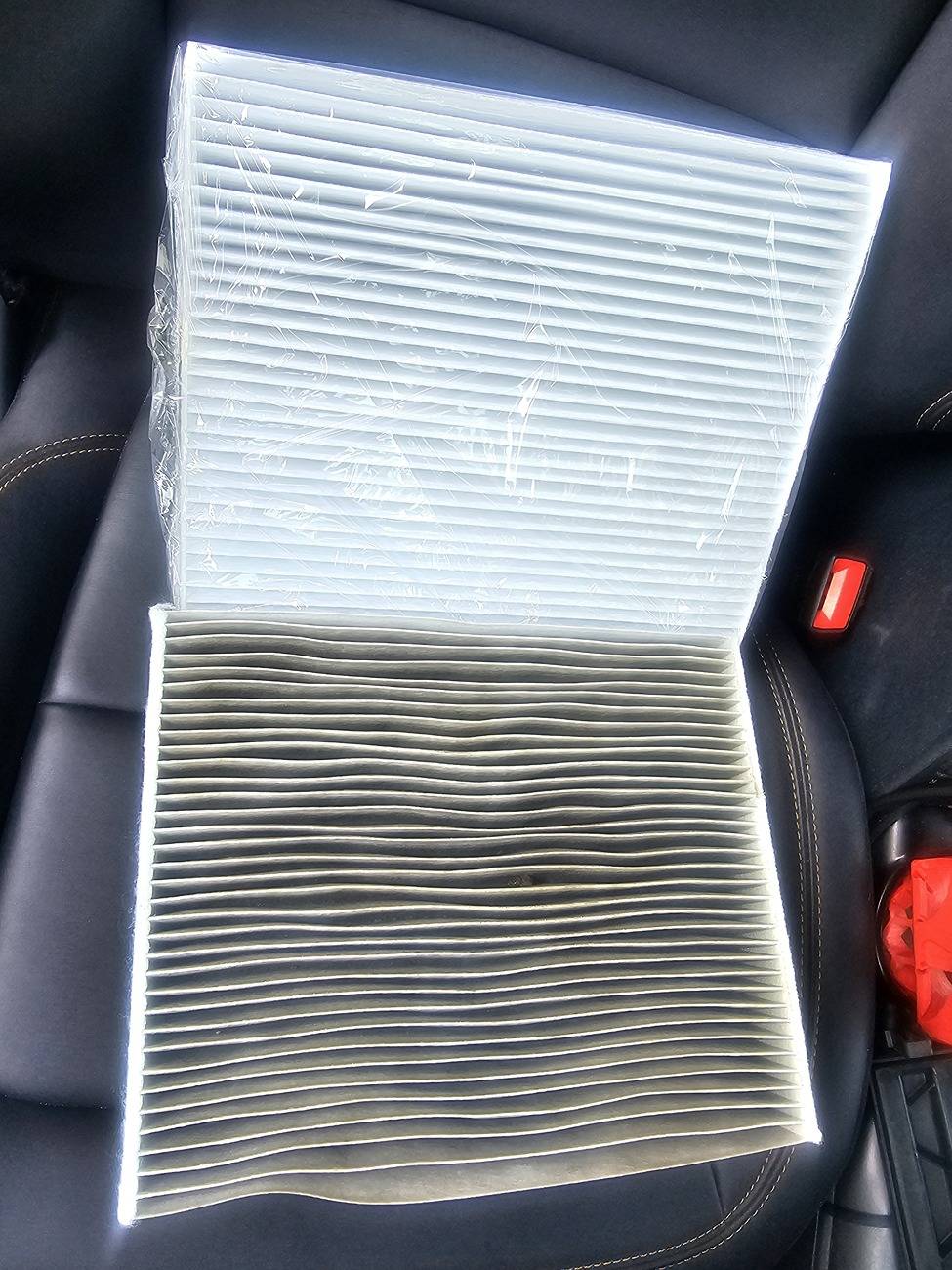
Cabin Air Filter - Holy Cow! Check yours early! I changed it around 15k and it was gross.

Transmission/Transfer Case - Stick with Ford's recommendations.
Differentials - around 10-15k, I switched to Amsoil Severe Gear when I popped on the Ford Performance Rear Diff Cover so I'd have a dang fill AND drain plug. I went with Dana's higher(thicker) recommendations, but you may want to stick with Ford's if you live in the freezing cold.
Tires - Just like every other car unless you're off-roading and then you would want to inspect them before and after each trip at least.
Oil
Mileage - I didn't change it until 5k miles and it was just as good on a Blackstone Laboratories report as our dear friend who changed his around 1k miles.
Type - 5w20(or whatever Ford says) Costco full synthetic; it's Mobil 1, essentially.
Filter - Wix XP (not on Carbon's awesome post, but good oil should have a good filter)
Air Filter - I switched it around 15k with a K&N; I do not believe in horsepower claims, but it'll work.
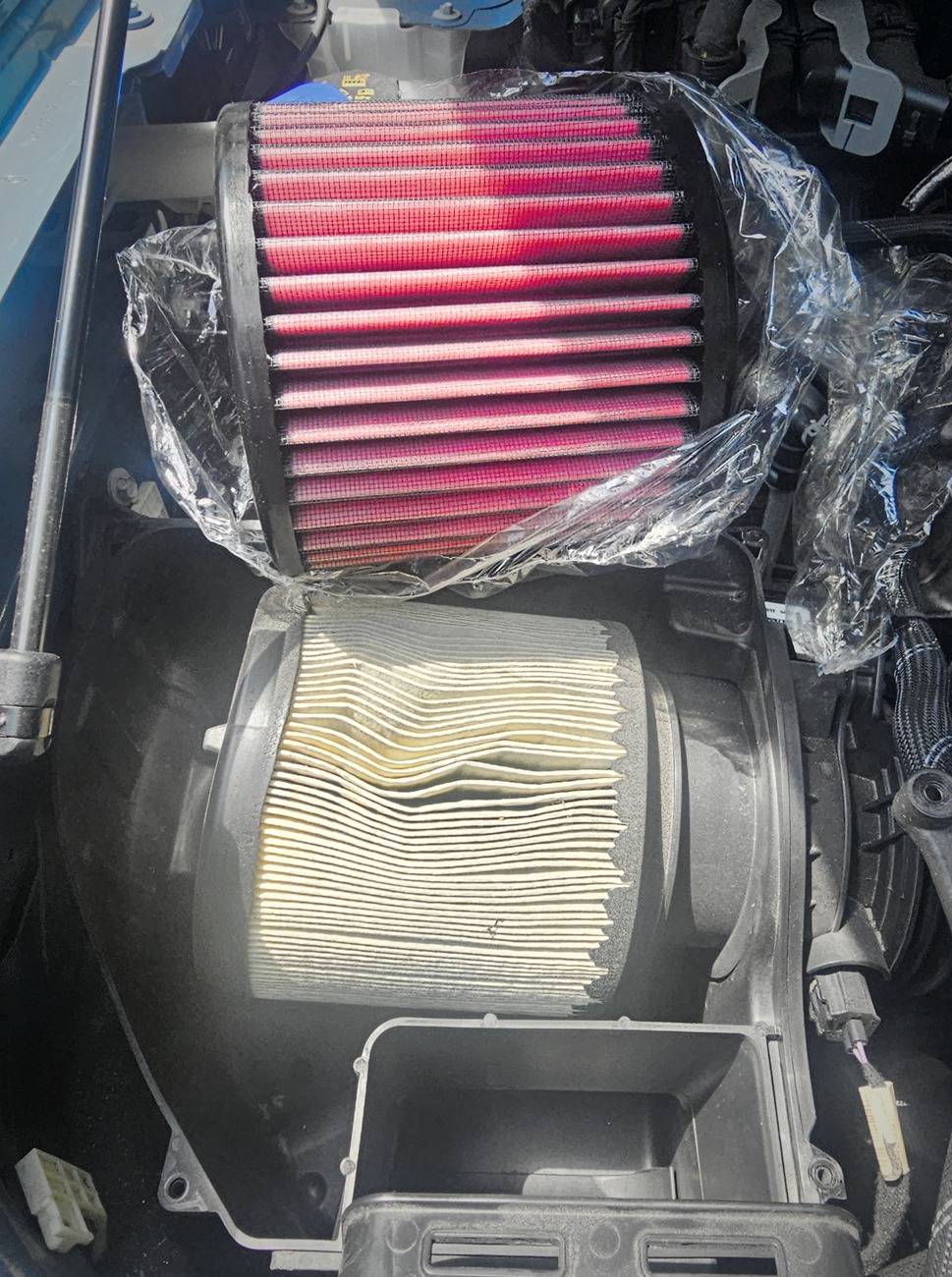
Cabin Air Filter - Holy Cow! Check yours early! I changed it around 15k and it was gross.
Transmission/Transfer Case - Stick with Ford's recommendations.
Differentials - around 10-15k, I switched to Amsoil Severe Gear when I popped on the Ford Performance Rear Diff Cover so I'd have a dang fill AND drain plug. I went with Dana's higher(thicker) recommendations, but you may want to stick with Ford's if you live in the freezing cold.
Tires - Just like every other car unless you're off-roading and then you would want to inspect them before and after each trip at least.
- Joined
- Oct 25, 2021
- Threads
- 7
- Messages
- 1,373
- Reaction score
- 3,761
- Location
- [DELETED MEMBER 27901]
- Vehicle(s)
- [DELETED MEMBER 27901]
- Your Bronco Model
- Undecided
My first vehicle was a ‘98 Ranger that ran to 275k miles…on the original spark plugs…It's learned. "I can't do anything without approval from the hive mind, otherwise I'll stick out for doing things my own way and people will hate me". And of course now people carry the hive mind with them in their pocket, 24/7. I don't understand it.
Let me be the first: no, I don't care about a catch can and carbon buildup in my 7 year old GTI with DI. There. I said it.
Next up was an A4 2.0T that went to 206k miles on nothing more than frequent quality oil changes.
Don’t over complicate things…
- First Name
- Calvin
- Joined
- Mar 15, 2022
- Threads
- 18
- Messages
- 2,732
- Reaction score
- 3,494
- Location
- Phoenix, AZ
- Vehicle(s)
- 2002 Subaru WRX Wagon, 2023 Badlands (nonSAS)
- Your Bronco Model
- Badlands
These engines didn't have a catch can and both made it to 500K miles. Both were 100% stock, 2.3L engines in Ford Explorers. The teardown is worth watching.I would catch can the 2.3 Di engine. The 2.7 has some throttle body to fix oil build up on the valves. If you are planning to keep the Bronco long term.
I was thinking about a catch can until I watched this video.
https://www.bronco6g.com/forum/thre...ntional-vs-synthetic-and-failed-parts.100288/

- First Name
- Andy
- Joined
- Jun 5, 2023
- Threads
- 1
- Messages
- 36
- Reaction score
- 50
- Location
- Pennsylvania
- Vehicle(s)
- 21 ford bronco
- Your Bronco Model
- Black Diamond
Change engine oil at 3500 full synthetic, ft &rear diff 60k,tranny 40k,transfer case 30k,brake fluid 30k then coolant 60kAfter 4 years of wanting a Bronco I finally got a Big Bend with the 2.3 auto. I was curious what I should and shouldn't do to improve/keep the reliability of this Bronco as I plan on keeping it till the wheels fall off.

- First Name
- Freddie
- Joined
- Oct 20, 2022
- Threads
- 22
- Messages
- 567
- Reaction score
- 836
- Location
- California
- Vehicle(s)
- Bronco & Tesla M3
- Your Bronco Model
- Wildtrak
First oil change at 5K, then every 3K miles thereafter is a good start. There will be folks that will disagree with using premium fuel, but clean fuel is great for engines. Outside of that, change your oil and air filters regularly.
Consistently manage the basics, and the engine should serve you extremely well for quite some time.
Keep in mind, dealerships make the vast majority of their money in their service bays, not car sales, so following their service intervals, or waiting until you get a check-engine light doesn't serve anyone well.
Be proactive, not reactive. Protect your investment.
Consistently manage the basics, and the engine should serve you extremely well for quite some time.
Keep in mind, dealerships make the vast majority of their money in their service bays, not car sales, so following their service intervals, or waiting until you get a check-engine light doesn't serve anyone well.
Be proactive, not reactive. Protect your investment.
Sponsored
- Banned
- #26
brake fluid at least every 3 years regardless of mileage.brake fluid 30k
Brake fluid does not degrade with miles/use, it degrades over time. It degrades simply existing in an environment with humidity. It is hygroscopic.

- Banned
- #28
hang on now. Let's not conflate "premium" with "clean" with respect to fuel.There will be folks will disagree with using premium fuel, but clean fuel is great for engines.
"Premium" is a marketing term that means one thing and only one thing: octane rating. It is not a rating of "cleanliness" or anything else. You can have junk Mexican piss gas they call "premium".
Me, I use Top Tier fuels. That most certainly IS a rating that involves cleanliness, as well as other things. It is trademarked:
https://www.toptiergas.com/
Fuels must do certain things to be able to be called Top Tier. And this shit is real.
Me, I use Costco gas. Not only is it cheap, but they do something no one else does: they buy whatever cheap fuel is available at the time, but upon delivery to Costco they add their own additive package as the fuel is being pumped into the Costco underground tanks. This ensures that the fuel contains the Kirkland brand additive package at all times--which makes the fuel Top Tier.
Shell is also good, it's Top Tier, but it's more expensive.
Don't fool yourself into thinking you're getting a "better gas" because you're buying 93 octane.* Grocery stores sell "premium" gas that is 93 octane, but it's still not great gas--it doesn't have a quality additive package.
Me, I'm too poor to buy cheap.
I agree, clean fuel is great for engines. So buy clean fuel. Worst case, with DI engines, it'll keep your injectors clean and spraying well. Best case, with port fuel injection involved, it'll keep your valves clean. But don't blindly buy fuel labeled "premium" and assume it's better for your engine.
OP
OP

- Thread starter
- #29
What is your opinion on ethanol free gas, would a high quality version of ethanol free gas be considered clean in your opinion.hang on now. Let's not conflate "premium" with "clean" with respect to fuel.
"Premium" is a marketing term that means one thing and only one thing: octane rating. It is not a rating of "cleanliness" or anything else. You can have junk Mexican piss gas they call "premium".
Me, I use Top Tier fuels. That most certainly IS a rating that involves cleanliness, as well as other things. It is trademarked:
https://www.toptiergas.com/
Fuels must do certain things to be able to be called Top Tier. And this shit is real.
Me, I use Costco gas. Not only is it cheap, but they do something no one else does: they buy whatever cheap fuel is available at the time, but upon delivery to Costco they add their own additive package as the fuel is being pumped into the Costco underground tanks. This ensures that the fuel contains the Kirkland brand additive package at all times--which makes the fuel Top Tier.
Shell is also good, it's Top Tier, but it's more expensive.
Don't fool yourself into thinking you're getting a "better gas" because you're buying 93 octane.* Grocery stores sell "premium" gas that is 93 octane, but it's still not great gas--it doesn't have a quality additive package.
Me, I'm too poor to buy cheap.
I agree, clean fuel is great for engines. So buy clean fuel. Worst case, with DI engines, it'll keep your injectors clean and spraying well. Best case, with port fuel injection involved, it'll keep your valves clean. But don't blindly buy fuel labeled "premium" and assume it's better for your engine.
- First Name
- Freddie
- Joined
- Oct 20, 2022
- Threads
- 22
- Messages
- 567
- Reaction score
- 836
- Location
- California
- Vehicle(s)
- Bronco & Tesla M3
- Your Bronco Model
- Wildtrak
For me, premium fuel has absolutely nothing do with octane, although I do use the highest octane.hang on now. Let's not conflate "premium" with "clean" with respect to fuel.
"Premium" is a marketing term that means one thing and only one thing: octane rating. It is not a rating of "cleanliness" or anything else. You can have junk Mexican piss gas they call "premium".
Me, I use Top Tier fuels. That most certainly IS a rating that involves cleanliness, as well as other things. It is trademarked:
https://www.toptiergas.com/
Fuels must do certain things to be able to be called Top Tier. And this shit is real.
Me, I use Costco gas. Not only is it cheap, but they do something no one else does: they buy whatever cheap fuel is available at the time, but upon delivery to Costco they add their own additive package as the fuel is being pumped into the Costco underground tanks. This ensures that the fuel contains the Kirkland brand additive package at all times--which makes the fuel Top Tier.
Shell is also good, it's Top Tier, but it's more expensive.
Don't fool yourself into thinking you're getting a "better gas" because you're buying 93 octane.* Grocery stores sell "premium" gas that is 93 octane, but it's still not great gas--it doesn't have a quality additive package.
Me, I'm too poor to buy cheap.
I agree, clean fuel is great for engines. So buy clean fuel. Worst case, with DI engines, it'll keep your injectors clean and spraying well. Best case, with port fuel injection involved, it'll keep your valves clean. But don't blindly buy fuel labeled "premium" and assume it's better for your engine.
Personally, I use Kirkland Signature (Costco) exclusively. Aside from the poison the dealer filled my Bronco with to roll me off the lot, there's never been a drop of anything else in it, or any of my vehicles. OCD had me considering trying to syphon it out, LOL.
In fact, most road trips and outings are planned around Costco locations. You absolutely cannot beat having access to a relatively clean bathroom, a hotdog and a coke for $1.50, and a refill on gasoline.
In a pinch, I might consider Chevron, but haven't had to.
Too poor to buy cheap? Love it!
Sponsored


