
Sponsored
Looking at Badlands vs Sasquatch Wheel/Steering Geometry

OP
OP


- Thread starter
- #17
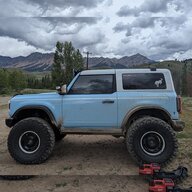
if at some point in the future I decide to run 37s, I can buy new wheels. A +35mm lets me use 34x11.5 with no problems, or a 35x12.5 with a 5mm spacer (granted theres the question above about stud length). I just dont know about moving an additional inch outwards if the sasquatch is already an inch past the original design...I would buy the 0 offset and not worry about having to cut out the front body mount crash bar to run 37s. 35mm offset would be fine with a metric narrow 35 like 285/75 r17. Need to figure out the tire you want at this point.
I would look hard at RTR zero offset hub centric wheels, they hold up better long term finish wise.
Thanks for the rec, I've been looking mostly at 8.5 rims but 9 does help move the contact patch in a bit
- First Name
- John
- Joined
- Oct 23, 2020
- Threads
- 7
- Messages
- 1,172
- Reaction score
- 2,082
- Location
- Stafford VA
- Vehicle(s)
- Badlands 2.3/Manual and a Gaggle of Jeeps
- Your Bronco Model
- Badlands
I understand being concerned about durability when the scrub radius is changed, but what kind of technical off-roading is negatively impacted by a 2 inch wider track? Generally in all the builds I've done for off-roading involving a lot of off camber obstacles/trails I've gone for a slightly wider stance, trying to balance that with tight spots on the trail.
OP
OP
- Thread starter
- #19
To clarify, its not that the offset affects the off-road capability. Its that the off-road use case affects the choice of wheel placement. It becomes much more important how much leverage is being placed on your steering components when dealing with high stresses and impacts associated with technical offroading.I understand being concerned about durability when the scrub radius is changed, but what kind of technical off-roading is negatively impacted by a 2 inch wider track? Generally in all the builds I've done for off-roading involving a lot of off camber obstacles/trails I've gone for a slightly wider stance, trying to balance that with tight spots on the trail.
Its important to consider that for some, a bronco is a 5 year daily on the pavement. Such people could easily run zero or negative offsets and never have any issues. But when looking at a time span of 10-15 years with consistent off-road use, especially loaded overlanding, the difference of an extra inch in leverage may just show itself.
Now this vehicle hasn't been out long enough to have real data points on those zero offset builds versus positive ones, so its all up in the air. Of course, if anyone out there has put 100k+ miles on zero or negative offset wheels, please speak up! Would add significant value to this hypothetical discussion.
Ultimately, unless I hear this anecdotal evidence from people, or receive a confirmation that ford did in fact adjust (at least) the scrub radius on the sasquatch, I just dont feel comfortable putting 0 offset (2+inches past factory centerline) on a vehicle that I plan to keep for 200k+ miles.
Call me a scaredy cat if you wish...

- First Name
- Barry
- Joined
- Nov 1, 2021
- Threads
- 14
- Messages
- 2,207
- Reaction score
- 5,547
- Location
- Santa Cruz, Calif.
- Vehicle(s)
- BMW X1, ‘1928 model A, “23 Bronco
- Your Bronco Model
- Big Bend
Ok “scaredy cat”…
 … but I am just an old mechanic and you are the mechanical engineer…party on!!
… but I am just an old mechanic and you are the mechanical engineer…party on!!Sponsored
- First Name
- John
- Joined
- Oct 23, 2020
- Threads
- 7
- Messages
- 1,172
- Reaction score
- 2,082
- Location
- Stafford VA
- Vehicle(s)
- Badlands 2.3/Manual and a Gaggle of Jeeps
- Your Bronco Model
- Badlands
Ok, that's a great answer to the question... So it's still durability that you're concerned with, not technical off-road ability, it's about the increased wear of the added leverage, and the greater stresses of that leverage that comes from off-road use.To clarify, its not that the offset affects the off-road capability. Its that the off-road use case affects the choice of wheel placement. It becomes much more important how much leverage is being placed on your steering components when dealing with high stresses and impacts associated with technical offroading.
Its important to consider that for some, a bronco is a 5 year daily on the pavement. Such people could easily run zero or negative offsets and never have any issues. But when looking at a time span of 10-15 years with consistent off-road use, especially loaded overlanding, the difference of an extra inch in leverage may just show itself.
Now this vehicle hasn't been out long enough to have real data points on those zero offset builds versus positive ones, so its all up in the air. Of course, if anyone out there has put 100k+ miles on zero or negative offset wheels, please speak up! Would add significant value to this hypothetical discussion.
Ultimately, unless I hear this anecdotal evidence from people, or receive a confirmation that ford did in fact adjust (at least) the scrub radius on the sasquatch, I just dont feel comfortable putting 0 offset (2+inches past factory centerline) on a vehicle that I plan to keep for 200k+ miles.
Call me a scaredy cat if you wish...
I can speak a little to that, but not quite up to the bar you're setting...
I put -6mm offset wheels with 37" tires on my first 6g Bronco Badlands 4 door at about 3000 miles, and then drove it to a bit over 80,000 miles that way before trading it in on my current Bronco. At around 30,000 miles, I upgraded the steering rack to a Hoss 3.0 rack, but the 2.0 rack was still ok. In my Broncos, I do what most here would consider as fairly technical rock crawling, but there are more than a few here who do more rigorous crawling in their's than what I do in mine. I have several Jeeps, and a Toyota Truggy that I use for truly hard core rock crawling.
All in, I'd say a Bronco with a 25mm ~ 30 mm offset is not gonna suffer from more durability issues from that moderate amount of increased offset. Now if you're going to be doing really hard technical off-roading, I'd expect durability issues even with the stock offsets
Last edited:
- First Name
- Adam
- Joined
- Jun 22, 2026
- Threads
- 2
- Messages
- 13
- Reaction score
- 22
- Location
- Aurora, CO
- Vehicle(s)
- 2025 Badlands, Manual, Hoss 3.0
- Your Bronco Model
- Badlands
This is interesting and I would also like to speculate here. 
I have a Hoss 3.0 and recently changed the wheels out to the black diamond steelies. I researched this same question using AI, and it told me that the sasquatch has a positive scrub radius. I believed the zero line to therefore be with the stock +55 wheels. I doubt they would change suspension geometry for Hoss 3.0, its such a small take rate. Plus they sell the shocks online on their performance parts website.
Anyway, like most folks here without direct knowledge of the Ford engineering process, I don’t know, but suspect strongly that Hoss 3.0 is just a collection of beefier parts with no geometry changes.
FWIW, I did notice a change in steering feel moving to the +55 wheels. It feels lesss dynamic/planted. A little more steering input is required to maintain a straight line. This is all consistent with removing positive scrub radius.
I have a Hoss 3.0 and recently changed the wheels out to the black diamond steelies. I researched this same question using AI, and it told me that the sasquatch has a positive scrub radius. I believed the zero line to therefore be with the stock +55 wheels. I doubt they would change suspension geometry for Hoss 3.0, its such a small take rate. Plus they sell the shocks online on their performance parts website.
Anyway, like most folks here without direct knowledge of the Ford engineering process, I don’t know, but suspect strongly that Hoss 3.0 is just a collection of beefier parts with no geometry changes.
FWIW, I did notice a change in steering feel moving to the +55 wheels. It feels lesss dynamic/planted. A little more steering input is required to maintain a straight line. This is all consistent with removing positive scrub radius.
OP
OP
- Thread starter
- #23
What size tires are you running?This is interesting and I would also like to speculate here.
I have a Hoss 3.0 and recently changed the wheels out to the black diamond steelies. I researched this same question using AI, and it told me that the sasquatch has a positive scrub radius. I believed the zero line to therefore be with the stock +55 wheels. I doubt they would change suspension geometry for Hoss 3.0, its such a small take rate. Plus they sell the shocks online on their performance parts website.
Anyway, like most folks here without direct knowledge of the Ford engineering process, I don’t know, but suspect strongly that Hoss 3.0 is just a collection of beefier parts with no geometry changes.
FWIW, I did notice a change in steering feel moving to the +55 wheels. It feels lesss dynamic/planted. A little more steering input is required to maintain a straight line. This is all consistent with removing positive scrub radius.
My current dilemma is trying to figure out if 12.5" width will work with a +35 without rubbing. If it doesn't work, my options are either: switch out my wheel studs (not preferred) to accommodate 5 or 10mm slip on spacers, OR run 0.75" bolt on spacers which leave me with a 16mm effective offset (also not preferred).

- Joined
- May 29, 2025
- Threads
- 25
- Messages
- 788
- Reaction score
- 1,021
- Location
- Sunny & Warm SoCal
- Vehicle(s)
- 2025 Badlands, Sas-sy Manual 2dr, # of fords
- Your Bronco Model
- Badlands
I know most of your comments are about the rack and steering...
For 26 Badlands non sas ford changed the offset for the wheel rims to better fit with the SAS fender flares [standard on all badlands...]
edit: for 26 non sas BL uses +40 offset
But is this comment specific to the 2026 model year?Known: the non-Sas runs +55 offset wheels, and the Sas runs +30 offset *with upgraded components.
For 26 Badlands non sas ford changed the offset for the wheel rims to better fit with the SAS fender flares [standard on all badlands...]
edit: for 26 non sas BL uses +40 offset
Last edited:
- First Name
- Adam
- Joined
- Jun 22, 2026
- Threads
- 2
- Messages
- 13
- Reaction score
- 22
- Location
- Aurora, CO
- Vehicle(s)
- 2025 Badlands, Manual, Hoss 3.0
- Your Bronco Model
- Badlands
35x11.5r17 Toyo Open Country AT3What size tires are you running?
I did a whole write up here: https://www.bronco6g.com/forum/thre...5x11-5-toyo-at3-vs-stock-territory-rt.134660/
Long story short the tread width of the Toyo is the same as the Goodyear, so I feel like the contact patch is going to be very similar even with the narrower tire.
Sponsored
OP
OP
- Thread starter
- #26
Yes, good point. This is for the 2025 and prior, the wider flares/offset coming standard on the badlands is a new change and not captured in this discussion.I know most of your comments are about the rack and steering...
But is this comment specific to the 2026 model year?
For 26 Badlands non sas ford changed the offset for the wheel rims to better fit with the SAS fender flares [standard on all badlands...]
IIRC the upgraded steering rack is also now standard, which points again towards Ford having the attitude that beefing up the components is enough to compensate for the increased stresses of the wider stance.
Thanks for pointing that out!
- First Name
- Jared
- Joined
- Feb 20, 2023
- Threads
- 45
- Messages
- 6,725
- Reaction score
- 12,959
- Location
- Denton, TX
- Vehicle(s)
- 2023 2dr Badsquatch
- Your Bronco Model
- Badlands
Pardon me if it's here somewhere and I just missed it, but how do you know the narrower non-Sas is the natural width for the design and not the Sas? it seems to me the engineers would want to design wider and go narrower, not go narrower and allow the wider within some limit. Again, I may be missing something or just a moron, but how do you know +55 is "truer" than +25/30?
- First Name
- Jared
- Joined
- Feb 20, 2023
- Threads
- 45
- Messages
- 6,725
- Reaction score
- 12,959
- Location
- Denton, TX
- Vehicle(s)
- 2023 2dr Badsquatch
- Your Bronco Model
- Badlands
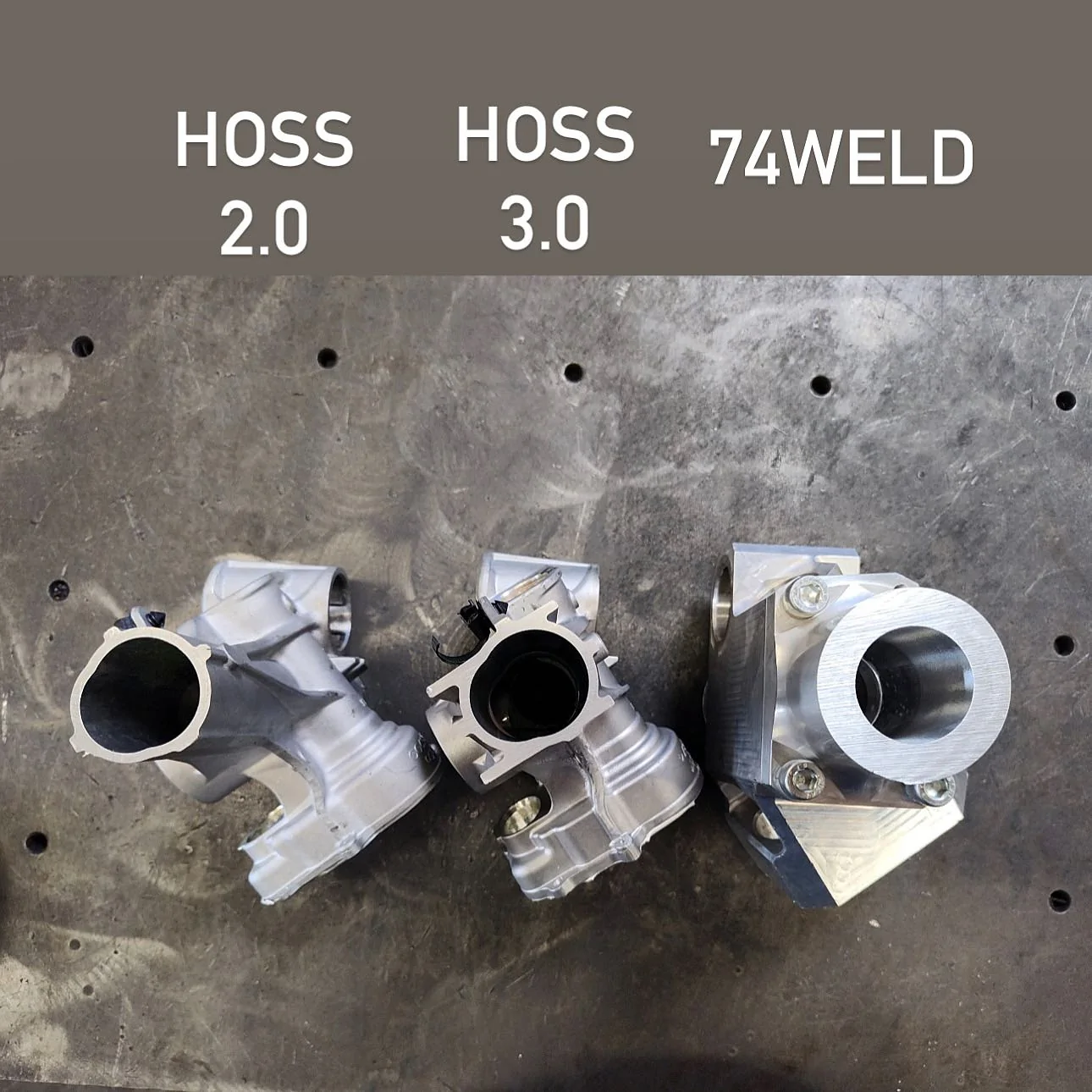
Well that's interesting. I thought the 3.0 was clearly beefier, but that's not what seems to show (?). I wonder if the way that shows the racks is ignoring where the 3.0 is actually beefier and kinda makes the 74W option appear clearly better (but is a different material with different specs).
OP
OP
- Thread starter
- #29
Well it does operate on the general assumption that a zero or slightly positive scrub is ideal.Pardon me if it's here somewhere and I just missed it, but how do you know the narrower non-Sas is the natural width for the design and not the Sas? it seems to me the engineers would want to design wider and go narrower, not go narrower and allow the wider within some limit. Again, I may be missing something or just a moron, but how do you know +55 is "truer" than +25/30?
So they either put the kingpin/SAI so that the sasquatch is sitting at that mark, and then the non sas models move into a negative scrub, which I highly doubt. Its much much more likely that the narrower models are at or near zero, and the sasquatch receives positive addition to the scrub.
But to answer your question straight, I don't know. I would love to get the actual answer which is why I made the thread. I would love even more if the answer was that both were separately designed around their own offset. But without any answer, all we can do is operate off of what is probable.
- First Name
- Jared
- Joined
- Feb 20, 2023
- Threads
- 45
- Messages
- 6,725
- Reaction score
- 12,959
- Location
- Denton, TX
- Vehicle(s)
- 2023 2dr Badsquatch
- Your Bronco Model
- Badlands
Is negative scrub worse than positive scrub? I'm just not sure why'd they'd go narrower in the design. Not being informed, that is, it just seems like the opposite would be truer (which of course makes me wonder about the even wider Braptor).Well it does operate on the general assumption that a zero or slightly positive scrub is ideal.
So they either put the kingpin/SAI so that the sasquatch is sitting at that mark, and then the non sas models move into a negative scrub, which I highly doubt. Its much much more likely that the narrower models are at or near zero, and the sasquatch receives positive addition to the scrub.
But to answer your question straight, I don't know. I would love to get the actual answer which is why I made the thread. I would love even more if the answer was that both were separately designed around their own offset. But without any answer, all we can do is operate off of what is probable.
Definitely would be nice to know for sure, too.
Sponsored


