

- Thread starter
- #1
I'm guessing the block heater plug will come out of the bottom of the grill, but has anyone actually seen it?
Sponsored

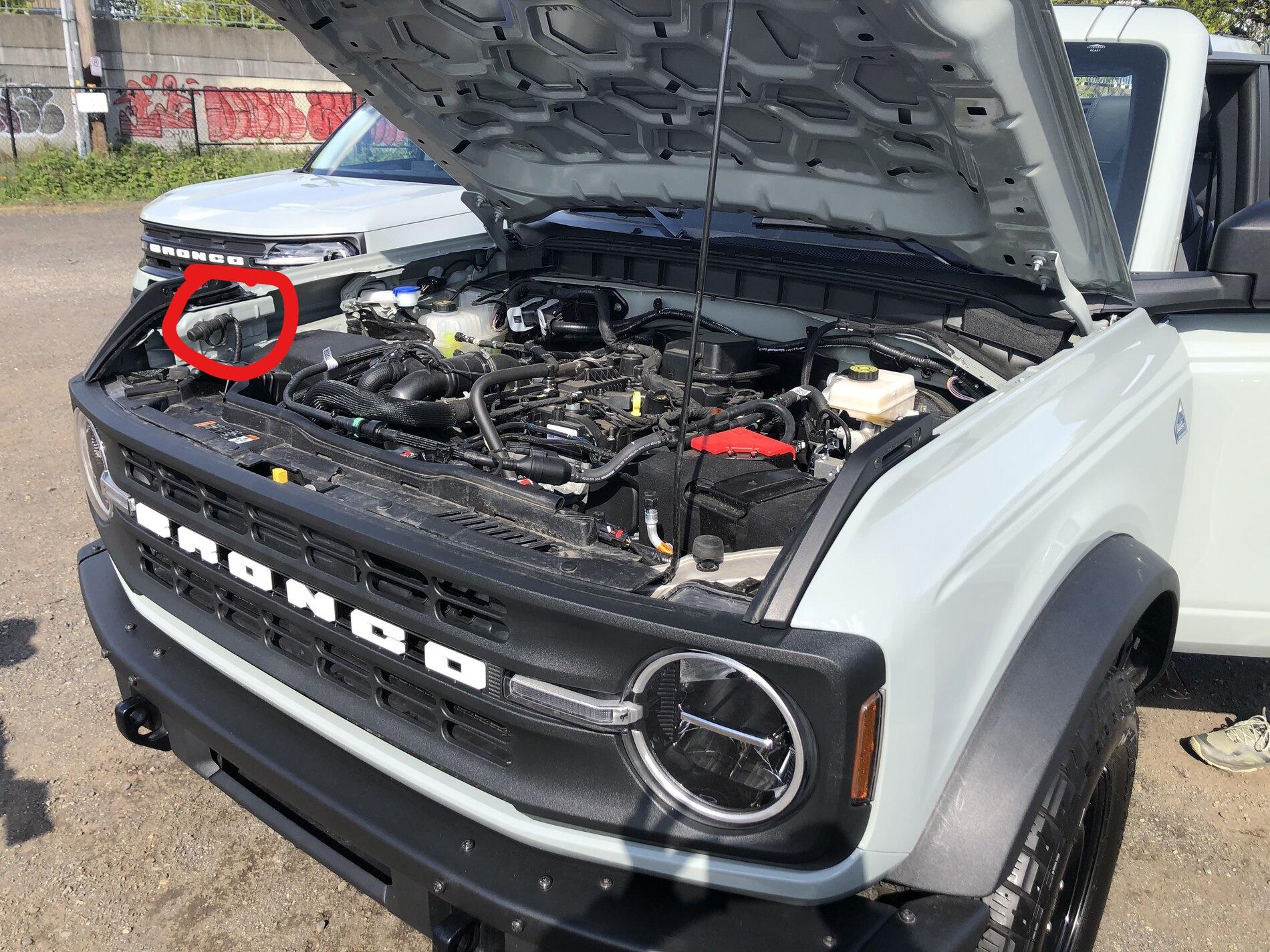
It looks like you're right. My F-150's plug comes out from behind the bumper, this location looks like you might have to pop the hood to use it. I'm not a fan.Someone else posted pictures from a dealer event. I happened to notice this for the first time. Looks like the block heater plug

I'm not a fan of the pop-the-hood to use the plug either. But a popped hood might be a reminder that it's plugged in so I don't forget and drive away.It looks like you're right. My F-150's plug comes out from behind the bumper, this location looks like you might have to pop the hood to use it. I'm not a fan.
That is a good point. I may have destroyed a few extension cords over the years when I drove off while still plugged-in.I'm not a fan of the pop-the-hood to use the plug either. But a popped hood might be a reminder that it's plugged in so I don't forget and drive away.
I imagine a short extension could be rigged up in there.
I have a feeling it’s location has to do with water fording depth. If it were mounted lower at the bumper it would be more likely to get wet and possibly corroded. I know my F150 had a recall due to a possibly corroded plugIt looks like you're right. My F-150's plug comes out from behind the bumper, this location looks like you might have to pop the hood to use it. I'm not a fan.

My dad's fiesta heater plug is like this. It SUCKS.It looks like you're right. My F-150's plug comes out from behind the bumper, this location looks like you might have to pop the hood to use it. I'm not a fan.

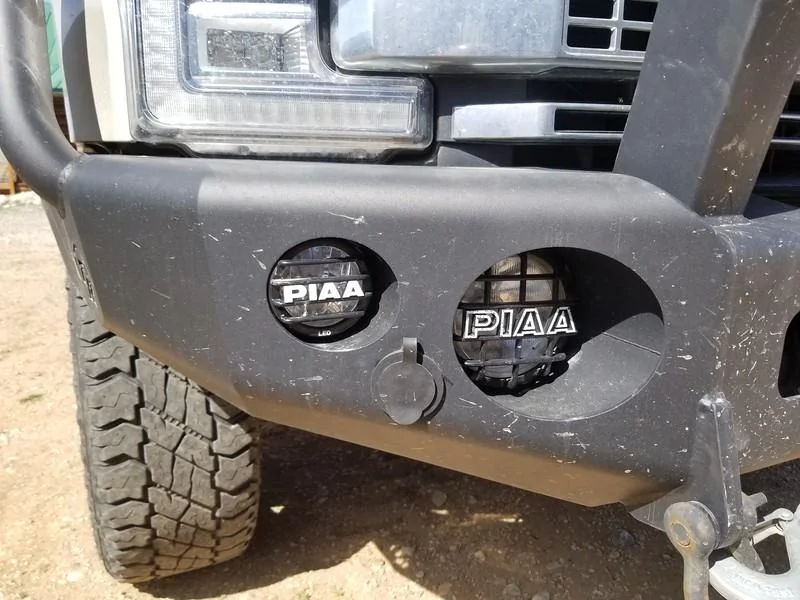

That’s a nice, sano setup you’ve done. Do you get corrosion around the hole you bored in the bumper?I've noticed on newer vehicles the cords come coiled up near the battery. I live in a cold climate and work in even colder some times. I also add a battery heater/blanket and silicon pad heaters on the oil pan and trans pan, if an auto.
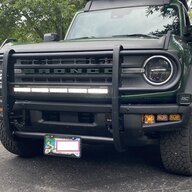
I relocate the wiring to the bumper using a suitable inlet and use a cord with a lighted end. The glow gives you a warm feeling when it is -20 out there.
https://www.amazon.com/gp/product/B074T57WS6/ref=ppx_yo_dt_b_search_asin_title?ie=UTF8&psc=1

I used a hole saw, and spray painted before I installed the plug. It is 3/16 steel, so even if it does corrode you got years before it goes deep.That’s a nice, sano setup you’ve done. Do you get corrosion around the hole you bored in the bumper?

do not plug it into 220 if your bronco is a us version. the 220v version will have a typical 220v plug.Old subject revisited. I had no problem finding the plug for the engine block heater on my 2021 Badlands. I agree with some of the comments about why Ford installed it in this position.
1) above fording depth, probably not a big issue since it is not energized when it is unplugged
2) forces the owner to open the hood and leave it unlatched as a reminder that it is plugged in.
I had a short, (9") extension cord with a flat wire cross section that fits on the outside passenger side of the hood without risk of damaging the hood or cord, leaving a small plug on the outside of the hood. I didn't want to pull the cord out of the fastener on the inside of the engine compartment, and this seems to work pretty well for me. Ambient temp was -32 C recently.
I have a question for the group. Is the Engine Block heater designed to be used with standard North American Voltage, and Standard European Voltage. The user manual does not reference standard US voltage of 110-120 volt AC, but it does mention 220-240 volt AC. I think some block heaters in Canada may be 240 volt AC, but I am not sure how common that is.
Page 153 of the owners manual states. "You can connect the system to a grounded 220-240 volt AC electrical source."
Is this why the manual states the power rate as a range?
"The heater uses 0.4 to 1.0 kilowatt-hours of energy per hour of use." Page 154
So, the block heater will provide ~400 watt-hours of power at 110-120 volt, and ~1,000 watt-hours at 220-240 volt?
This is a really sloppy section IMHO. I don't know who writes these user manuals, but this manual seems to leave out a lot of detail. For one, the fact that most owners will be using 110-120 volt AC power supply in North America, but they provide a wishy washy statement that you CAN connect the system to a 220-240 volt AC system. Nothing stated that 110-120 volt AC is the expected voltage, or is it? What is really important though for most of us is how many amps will the heater draw? Based on the spec of 400 to 1000 watt-hours at a voltage between 110 and 240, the current will be somewhere between 3 and 4 amps if the heater resistance is between 30 and 60 ohms. But it is possible a 110 volt supply could provide 1000 watt-hours at 9 amps if the heater has a resistance of 12.1 ohms.
Time to get out the multimeter I guess. ----- I'm back, the multimeter test indicates the resistance is 34.2 ohms. So 30 to 60 ohms was not a bad guess based on the poor write up in the user manual. I guess they are using the average US voltage of 117 Volts which will result in 400 watt-hours at 34.2 ohms. But using the average 234 Volt value will result in 1600 watt-hours at 34.2 ohms. Hmm. Something isn't right then. Unless the resistance is variable based on temperature.
Sadly, the problems I have with this User Manual makes me wonder how much else has Ford got wrong. Unless of course I am wrong, and if anyone knows better, please let me know. This is kinda like Tom Peters "In Search of Excellence" book where they write about seeing coffee stains on the drop table at your seat on an airline makes you wonder if they are doing their engine maintenance.
Page 153 and 154, of the 2021 Bronco (TG1) Canada/United States of America, enUSA, Edition date: 202101, First-Printing.


