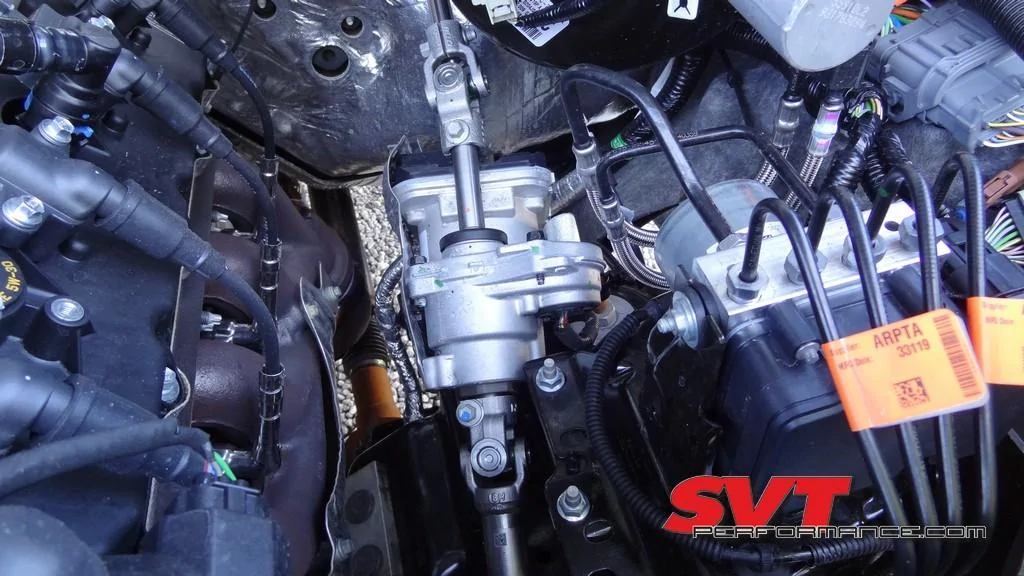

First time posting, yeah. This is why.To add, all suspension travels are limited by the length of the arms (on all suspensions) and driveshaft angles on solid axles and CV angles on IFS. on IFS, the arms are from center out, which means that the arms can be no more than less than half the width of the vehicle in a perfect setup. Youcannot achieve a perfect setup on a street vehicle as it has frame rails which are going to be 2' - 3' apart. that is also space taken up the arms can't be longer than. So, on a narrow frame vehicle, with 72" width, you are looking at arms that can be no more than 16" or so in length. this gives a travel range of around 10" when you run the angles. There is zero possibility to increase this travel/articulation any. Maybe you can squeeze it up to 12" or so. Most factory setups are going to be running A-arms closer to 10-12" because the frame rails are further apart for crash safety reasons, limiting travel more.
on an SFA the arms are connected to the frame back behind the axle, and are typically from a factory about 24"-30" in length, and it is very easy to modify them to be half the wheelbase in length (technically could go longer, but generally you don't want front and rear arms to cross due to articulation bind). This provides factory travels of 12"+ minus the shocks and springs. Granted, most factory SFAs are a 3-link, and run radius arms that have two connecting points on the axle which limit the travel through bind, but this is intentional. changing out the factory radius arms for a tube arm with heim joints increases the travel significantly. In short frame vehicles, like the Bronco, and the FSB, and the Jeep, the shortness of the driveshaft from T-case to diff is what is limiting the travel, and there is zero to be done with that short of going with drop T-cases (which is still easier than lengthening travel significantly on an IFS). and on these really short wheelbase vehciles, the front is capable of alot more travel and articulation than the rear when 4-linked. On a 3-linked IFS or coil solid rear with panhard, you do generally LIMIT the travel intentionally to reduce power/brake steer as when travel increases the side to side movement is increased significantly.
On articulation, when you tuck a wheel on an IFS, it literally takes all of the increased forces and removes equal weight on the contact patch of the opposing tire. On an SFA since the fulcrums are between the wheels (the spring mounts), as you tuck a wheel, it adds a fraction of the force to the opposing wheel, allowing for more solid traction throughout the travel range.
On strength, the CV joints, or double u-joints in some designs, of an IFS, and a number of increased fail positions that go through a significantly larger duty cycles then SFA/SRA u-joints. They also cannot be designed to be as robust due to a more limited operating enviroment as compared to the u-joints on a drive shaft which has more real-estate. The u-joints on most SFAs can be more robust as it is given the area inside the hub pivots, and the angles of it do not change with travel/articulation, only while turning (IFS joints will see increased angles or torques during both turning and travel) SFA axles can be more strongly supported as being incased in a, well, solid housing for the entire length.
Now, IFS certainly has it's places, adjust-ability, less unsprung weight, the ability to travel through camber independently, something SFAs cannot do and makes them suffer during handling exercises. and vertical compactness (the hub on an IFS can be horizontal from the frame, or even higher than the frame, on a solid axle the axle has to be below the frame....I guess technically you can go above, some hot rods/rat rods with I-beams do this, but that is for only show car use). For high speed use, or strictly road use, IFS is hands down better than solid axles. but high torque, low speed, high travel/articulation, SFA wins. And that's before discussing costs.
The TTB on the FSBs is an interesting middle ground case that got rid of the short arm length issue of the IFS...but it introduced it's own problem with camber through travel range due to this. IF you were building an IFS rig with about 12+ inch of lift, and a subframe, you could probably get arm length of 2'+, maybe even 3' on a vehicle the width of a full size truck, and increase travel to the 16" range, but you would have to relocate the diff as well.
This is starting to sound like the technical stuff I have been waiting to read. I do hope more is to come. I do lean on the side of SFA. Granted some technical discussion specific to the Bronc is in limbo due to not having more info, ie is it gonna be a boy (SFA) or a girl (IFS) or possibly a girl who identifies as a boy, or some variation of the alphabet group.
So I’m hear to learn and get into wheelen. My question is for the quote above, what is “ TTB on the FSB” ?
Thanks.
Sponsored